

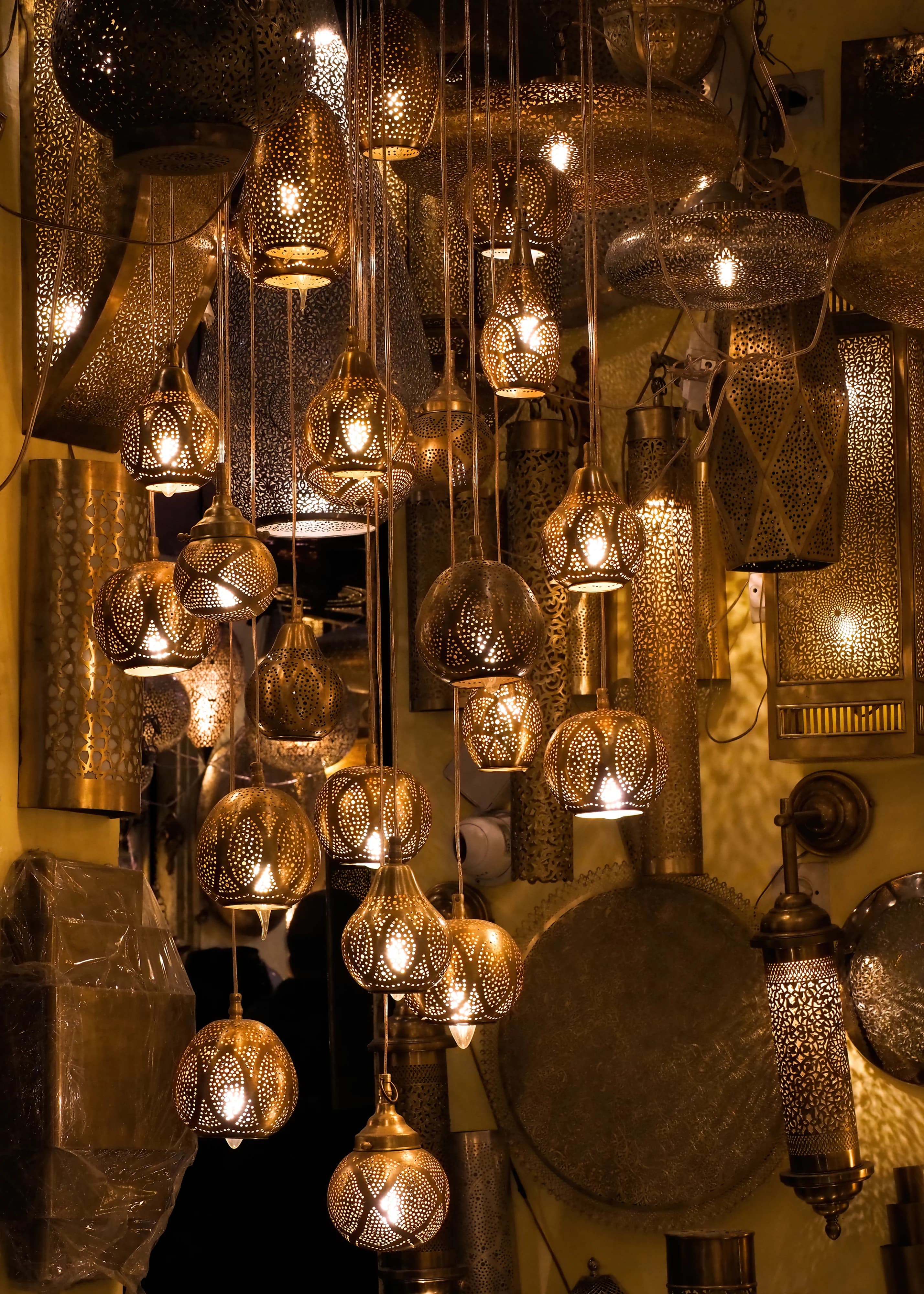
Begin where the walls open
Marrakech's medina can make every sense compete. Scooters thread the lane, cedar and leather meet charcoal smoke, hammered metal catches a blade of sun, and a seller names the country he thinks you come from before you have found the shop entrance. The intensity is real. So is the temptation to treat it as the whole city.
The medina, inscribed by UNESCO, holds extraordinary urban history and living craft. It is also home to residents carrying shopping, children going to school and workers moving goods through streets never designed for today's traffic. Walk to one side, listen for wheels and engines, ask before photographing people, and do not block a workshop while composing a doorway. Getting lost is romantic only while you remain on public routes and daylight, confidence and battery are on your side.
Use a licensed guide for historical depth and for introductions that do not turn every conversation into a sale. Agree the duration, language, route and shopping expectations in advance. A guide who explains water, housing, worship and restoration can give the visible ornament a civic context that wandering alone may miss.
Gueliz in the present tense
Crossing towards Gueliz changes the geometry. Avenues widen, apartment blocks lift above cafes, galleries and shops, and the French colonial-era plan becomes part of a more complicated contemporary city. Gueliz is sometimes offered as relief from the medina. Better to read it as evidence that Marrakech has never stopped negotiating power, style, migration and modernity.
Spend a morning between a current exhibition, an independent bookshop, a neighbourhood lunch and the street itself. Verify opening hours directly; cultural spaces may close for installation, prayer, holidays or summer schedules. If a gallery is free, that does not make staff a private lecture service. Ask a focused question, buy a publication when useful, and credit artists when sharing work online.
Contemporary Moroccan design is frequently marketed abroad as a look detached from makers. In Marrakech, ask who designed an object, where it was made and which materials were used. A clear answer is more valuable than a rehearsed claim of ancient tradition. New work does not become less Moroccan because it uses an industrial process or a global reference.
“The walls contain a magnificent inheritance. The city outside them supplies the present tense.”
Rivileo Journal
Gardens are systems, not backdrops
The city's celebrated gardens offer shade, geometry and water, but they should also prompt practical questions. Marrakech lives with heat and water pressure. Some gardens preserve botanical collections and historic design; others are commercial attractions. Check timed-entry rules, accessibility and current conservation information before visiting, then notice how irrigation, species choice and maintenance shape the calm.
Le Jardin Secret restores the idea of the Islamic garden within the medina; Majorelle has a different twentieth-century history and heavy demand. Menara and Agdal connect landscape, agriculture and royal history at a larger scale, though access and conditions vary. Choose one or two rather than racing through every green space. Shade is most instructive when you stay long enough to feel what it changes.
Carry water in a reusable bottle where safe refill is available, but do not assume public taps are potable. Dress for sun and local expectations without turning modest clothing into costume. In religious and residential contexts, follow posted guidance and the lead of hosts. Respect is specific, not theatrical.
The price of an object
Shopping can create meaningful exchange or reduce craft to theatre. In the souks, bargaining is common in many contexts, but the aim is a fair agreement, not a story about defeating the seller. Decide what the object is worth to you, ask about material and maker, and walk away politely if the gap remains. Do not begin a long negotiation for entertainment.
Leather, rugs, metalwork, ceramics, wood and textiles each have different supply chains. Claims about cooperatives, natural dyes, handmade production or regional origin should be verifiable. Visit workshops that welcome visitors and explain payment clearly. Be cautious with demonstrations attached to pressure, unsolicited guiding or a price that changes after tea.
Beyond the medina, districts such as Sidi Ghanem contain workshops and showrooms but are dispersed and traffic-heavy. Plan transport and appointments; do not expect a pedestrian shopping village. The trip is worthwhile when it reveals design as current employment rather than a souvenir category.
Leave by a different gate
End the day at the edge of the old city rather than its centre. As light cools, families reclaim parks and pavements, commuters move home and the Atlas may appear beyond the rooftops when weather permits. Jemaa el-Fna remains a remarkable public space, but animal welfare, photography consent, food hygiene and crowd awareness require judgement. Watch before participating, agree any paid interaction first and keep valuables secure without suspicion becoming your only way of seeing.
Marrakech beyond the medina is not a secret list. It is a change in attention: from object to maker, garden to water, facade to planning, visitor performance to ordinary movement. The walls contain a magnificent inheritance. The city outside them supplies the present tense.
Practical gentleness
Heat changes judgement before it announces itself. Start earlier, slow the middle of the day and carry oral rehydration support if appropriate for you. Use a hammam only after understanding whether it is private, communal, tourist-oriented or neighbourhood-based, what clothing is expected and what services cost. Intimacy needs more preparation, not less.
Traffic also changes the route. Distances that look walkable may involve hostile junctions, dust or long exposed pavements. Use a reputable taxi or arranged transfer, confirm the fare or meter convention, and share the destination clearly. Accessibility information is uneven, so ask venues direct questions about steps, surfaces, toilets and seating rather than accepting a generic accessible label.
Arabic and Tamazight are official languages of Morocco, while French and other languages are widely used in different contexts. A greeting and thanks are worth learning, but do not turn language into a performance for strangers. Listen to how your host speaks and let translation tools support, not replace, patience.
Money requires the same calm. Carry a mix of payment options, use established cash machines, count change without drama and reserve small notes for taxis, tips and modest purchases where appropriate. Tipping conventions depend on service and setting; ask a trusted local source rather than applying a rigid imported percentage. Generosity works best when it is informed and discreet, not when it becomes a public measure of virtue.
A route with room in it
- MorningOne medina quarter with context
Walk with a licensed guide or a researched route, leaving working lanes and doorways clear.
- MiddayGueliz gallery and lunch
Check current exhibitions and spend time in the modern city without framing it as an escape.
- AfternoonA garden read slowly
Choose one garden and pay attention to water, shade, plant choice and restoration.
- By appointmentA working design studio
Confirm that visitors are welcome and ask clear questions about authorship and materials.