

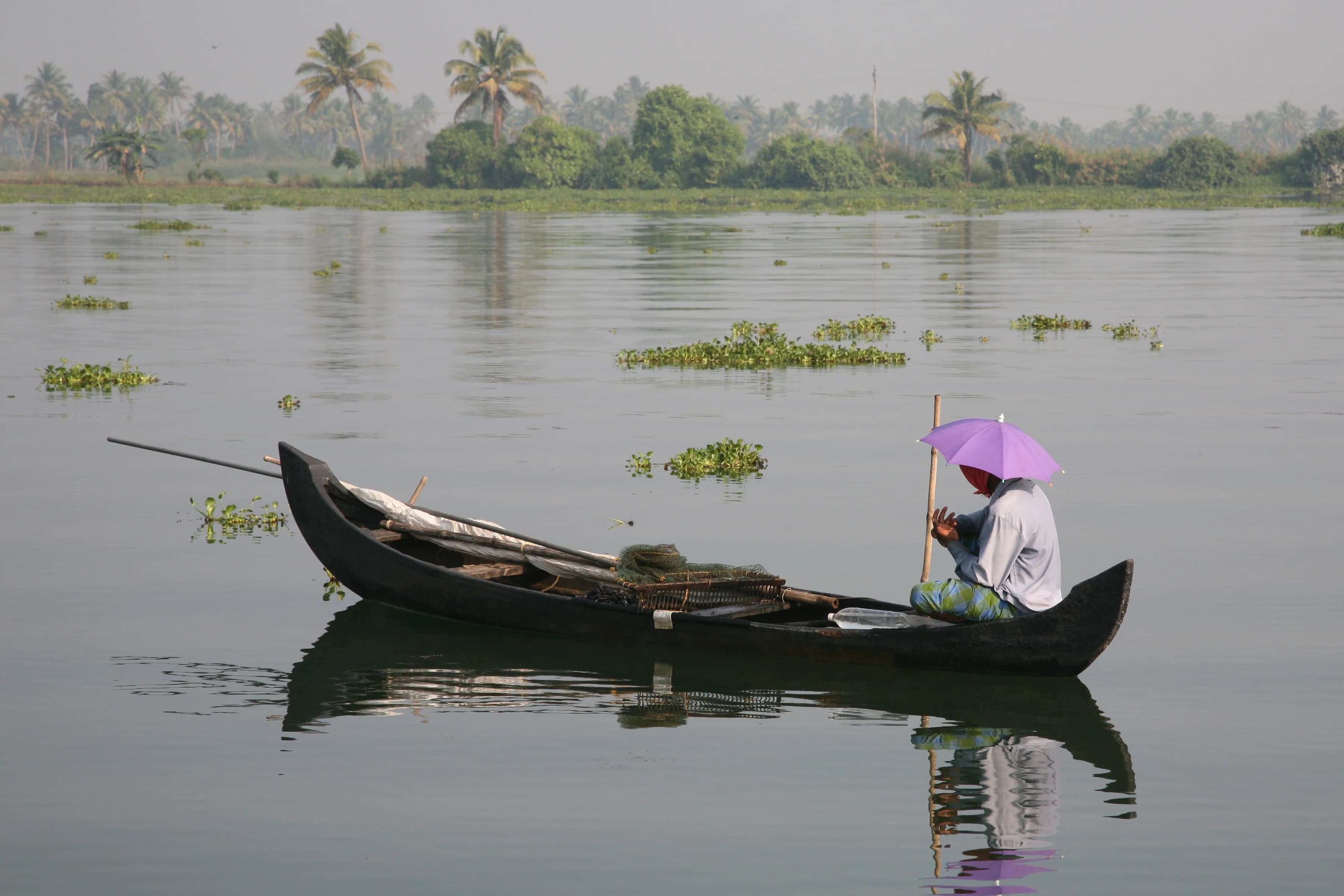
Water as an address
From the bank, a backwater can look motionless. Step onto a ferry and the landscape begins to organise itself. Canoes nose out from side channels. Schoolchildren wait at small jetties. A delivery boat carries cylinders, sacks and a motorbike with the composure of a street corner shop. Water is not the view here. It is the address system, the road and part of the day's work.
Kerala's backwaters are a connected world of lakes, rivers, lagoons and canals near the Arabian Sea. Vembanad is the great presence in the central network, but the experience changes at the scale of a narrow channel, where houses face the water and every wake reaches somebody's steps. That closeness is why travelling slowly matters. A large boat moving fast can turn observation into intrusion.
Begin with a scheduled public ferry where the route and timetable fit. It will not perform the landscape for you. It stops because people need to get somewhere, and the fare is part of everyday mobility rather than an excursion. Keep luggage compact, give priority to regular passengers, and ask before photographing anyone at close range.
Choosing a boat with care
Houseboats evolved from kettuvallam cargo boats and now range from modest overnight vessels to elaborate floating hotels. The romance is understandable: evening settles on the lake, a cook works with local fish and vegetables, and the shore moves at the speed of thought. The environmental pressure is also real. Waste, fuel, noise and congestion do not disappear because the hull is made to look traditional.
Ask an operator direct questions before paying. How is sewage stored and disposed of? Is the vessel licensed through the relevant authority? How many hours does the engine run? Where does the crew come from, and are wages and rest built into the price? Can the journey include stretches under paddle or electric power? A responsible operator should answer without turning care into vague branding.
A day boat or small canoe with a local guide can offer more contact with narrow canals and reduce the appetite for an oversized cabin. For an overnight stay, smaller vessels and shore-based homestays allow spending to reach households while keeping sleep, water and waste on land. None of these formats is automatically virtuous; the useful habit is to ask where the impacts go.
“Water is not the view here. It is the address system, the road and part of the day's work.”
Rivileo Journal
The village is not an exhibit
Responsible Tourism initiatives in Kerala have worked to connect visitor spending with community enterprises, local food, craft and guiding. Seek programmes with transparent local participation rather than stops arranged only to produce a photograph. Coir making, fishing and farming are skilled livelihoods. A demonstration should be paid, consensual and described honestly, not presented as a timeless scene waiting for the visitor.
On shore, dress for heat, rain and local norms; carry a light layer that covers shoulders and knees when entering religious places or when a host suggests it. Learn a greeting in Malayalam, accept that English fluency varies, and let a guide interpret when detail matters. Hospitality does not create a right to enter private homes, handle tools or photograph children.
Food is one of the best reasons to spend time on land. A meal served on a banana leaf might include rice, vegetables, pickles and preparations that change with region, community, season and household. Do not reduce Kerala cooking to a single coconut-rich formula. Ask what is local today, mention allergies early, and eat at the pace of the table rather than the next departure.
Monsoon intelligence
The backwaters are shaped by rain, and any itinerary that ignores the monsoon is only pretending to understand them. Conditions vary through the state and between years. Heavy rain can alter transport, water quality and visibility; heat and humidity can be demanding even when skies look calm. Use current forecasts and official advisories, not a generic seasonal promise copied from an old guide.
Pack to keep essentials dry without creating a trail of disposable plastic. A refillable bottle, secure sandals, breathable coverage, insect protection and a dry bag are useful. Life jackets should be available and worn according to the vessel's safety instructions. If weather or maintenance makes a skipper cautious, let caution decide the route.
The finest backwater moment may be the least cinematic: a ferry waiting for somebody running along the bank, rain drumming on a metal roof, tea shared while a channel clears. Kerala does not need to be consumed in one grand cruise. Take it one waterway at a time and the landscape remains connected to the lives that give it meaning.
What the water carries home
Before leaving, notice what you are asking the destination to dispose of. Refill toiletries instead of abandoning small bottles, decline unnecessary packaging and keep batteries or specialist waste for a proper facility. Islands and waterside settlements make the afterlife of convenience unusually visible, but the responsibility begins before the suitcase is packed.
Choose souvenirs with the same care as a boat. Ask where coir, cloth, spice or craft was made and who set the price. A label that says handmade or women's group is not sufficient evidence by itself; transparent organisations can explain their structure. Buy fewer objects that carry a clear relationship rather than many objects that imitate one.
The backwaters also ask for patience in memory. Do not geotag a private jetty, publish a child's portrait without guardian consent or describe a household as untouched by time. Kerala is technologically connected, politically alive and changing. The slower traveller does not freeze it in the moment that looked most beautiful from the boat.
Allow one dry day for the land beyond the landing. Local museums, places of worship open to visitors, produce markets and ordinary bus routes can explain the water from another angle. Confirm etiquette and access, hire interpretation where it adds depth and avoid filling the day simply because the boat has stopped. Rest is especially sensible in humid conditions. The story of the backwaters is not suspended when you step ashore; it continues through food systems, migration, education and the decisions being made about the water's future.
Before swimming or wading, ask locally about water quality, currents, depth and appropriate access. A canal beside a guesthouse is not automatically recreational water. Children and confident local swimmers may understand hazards a visitor cannot see. Admiration never requires imitation; a shaded bank can be the safest place from which to watch the afternoon pass.
A route with room in it
- Day oneArrive and take the public ferry
Use an ordinary route to understand how settlements connect before booking an excursion.
- Day twoA small-canal journey
Choose a licensed local guide and a craft suited to narrow water, with clear safety equipment.
- EveningStay on shore
A well-run homestay or small hotel can keep more spending in the village and reduce pressure on the water.
- Day threeFood, coir or farming with consent
Book a transparent community programme and pay for people's time and skill.