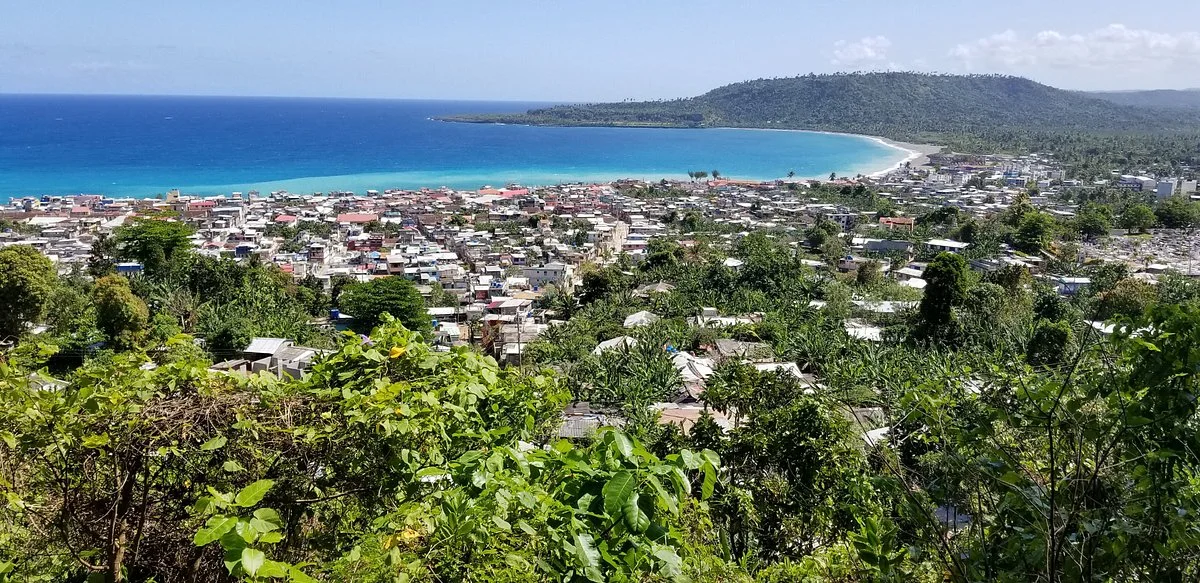
Baracoa, whose full original name is: Nuestra Señora de la Asunción de Baracoa ("Our Lady of the Assumption of Baracoa"), is a municipality and city in Guantánamo Province near the eastern tip of Cuba. It was visited by Admiral Christopher Columbus on November 27, 1492, and then founded by the first governor of Cuba, the Spanish conquistador Diego Velázquez de Cuéllar on August 15, 1511. It is the oldest Spanish settlement in Cuba and was its first capital (the basis for its nickname Ciudad Primada, "First City").
Relax around the town, share a bottle of rum and koola cola with locals at the nightclub 100 steps above the town. The Casa de la Trova by the church offers itself as a comfortable and welcoming drinking establishment where you can dance with the locals. Popular for any blossoming salsa lovers.
Travelers weary of the repetitive (and frankly somewhat boring) food found elsewhere in Cuba can breath a sigh of relief when they reach Baracoa—and then dig straight into the small city's delicious regional dishes.
The local peanut butter bars are a good snack. The peso pizza is a good treat too.
In general, aside from chocolate, government-run restaurants do not serve local cuisine.
Be sure to check out Baracoan drinking chocolate – hot chocolate brewed with cinnamon leaves. It's delicious, though the powdered milk limits its potential somewhat.
You'll of course find the usual assortment of peso and CUC sodas and alcohol in bars all around Baracoa.
Contrary to what you might expect for such an isolated city, Baracoa is not any more expensive than anywhere else in Cuba, partly because the Cuban tourism market is so tightly-controlled. Costs in Baracoa run the gamut depending on whether you frequent peso or CUC places.
In general, as one goes east in Cuba, how much people care whether you give them CUC or CUP decreases, and this is most so in Baracoa, with virtually all non-tourist goods (such as trips to the national park) being payable in either currency.
As elsewhere in Cuba, casas particulares, available for around CUC15-20 per night will most likely be your cheapest options. Note that while many casas are small, they tend to operate in informal (and not entirely legal) family networks, so if the main casa is full, you will stay at a family member's.
Be prepared for the onslaught of hoteliers and taxi drivers as you arrive at the bus terminal. Watch out for the people claiming to be hotel owners, offering you a very cheap rate because this may change when you arrive at the hotel, meet the real owner and get given the real room rates. The game is that by this time you cannot be bothered to go and look for another hotel because it is just too hot. Instead just walk the short distance from the bus terminal into the city and check out 2 or 3 casas for yourself.
Although no longer reachable only by boat, Baracoa remains pretty isolated. Baracoa is accessible from Guantanamo City via La Farola (the lighthouse), a mountain pass road built in the 1960s to reward the Baracoans for their support of the revolution.
Note that transportation in and out of Baracoa on both the plane and bus is frequently fully-booked during high season. So, make sure to buy your tickets early enough, especially when leaving, since there are not many alternatives. In low season, however, the Viazul bus might run with less than 10 people.
Baracoa is a tiny and very compact town, as such walking will be the primary form of transportation in-town. For excursions further afield, a taxi, a bici-taxi or horse-drawn vehicles are handy. Bici-taxis are everywhere and can be paid for in CUC or CUP. Regular taxis are less common but can be hired if necessary.
Shielded by heavy mountains on one side and the Atlantic ocean on the other, Baracoa has historically been isolated from the rest of Cuba; until the 1960s, it could only be accessed by sea. This isolation has contributed to much of Baracoa's distinct identity from the rest of Cuba.