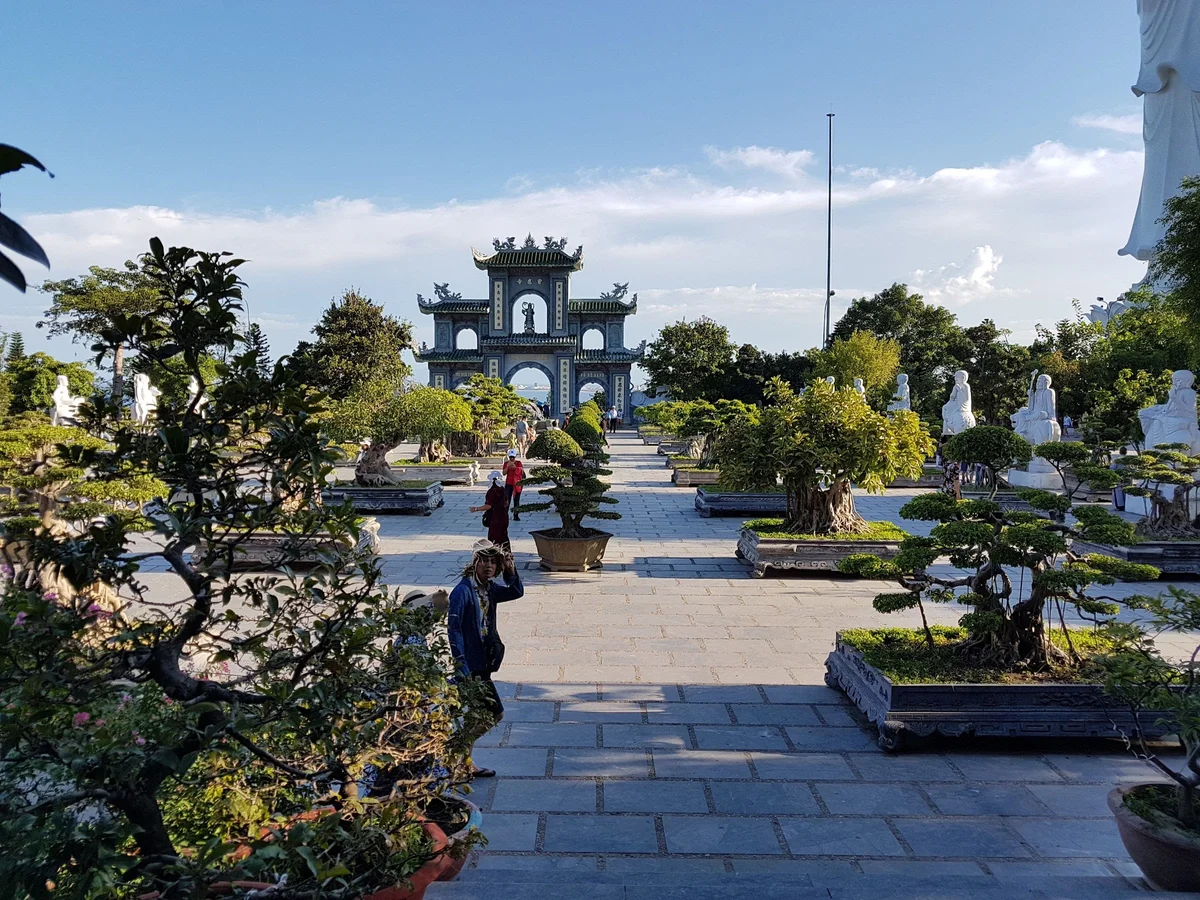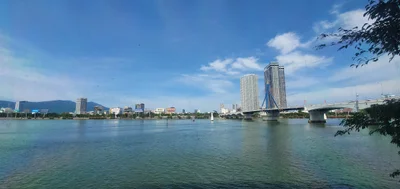
Da Nang or Danang ( dah, də NANG, NAHNG; Vietnamese: Đà Nẵng, [ʔɗaː˨˩ naŋ˦ˀ˥] ) is a class-1 municipality and the fifth-largest city in Vietnam by municipal population. It lies on the coast of the East Sea of Vietnam at the mouth of the Hàn River, and is one of Vietnam's most important port cities. As one of the country's five direct-controlled municipalities, it falls under the administration of the central government.
The city was known as Cửa Hàn during early Đại Việt settlement, and as Tourane (or Turon) during French colonial rule. Before 1997, the city was part of Quang Nam - Da Nang Province. On 1 January 1997, Da Nang was separated from Quảng Nam Province to become one of four centrally controlled municipalities in Vietnam. Da Nang is designated as a first class city, and has a higher urbanization ratio than any of Vietnam's other provinces or centrally governed cities.Da Nang is the commercial and educational center of Central Vietnam and is the largest city in the region. It has a well-sheltered, easily accessible port, and its location on National Route 1 and the North–South Railway makes it a transport hub. It is within 100 km (62 mi) of several UNESCO World Heritage Sites, including the Imperial City of Huế, the Old Town of Hội An, and the Mỹ Sơn ruins.
Da Nang has a Human Development Index of 0.779 (high), ranking fifth among all municipalities and provinces of Vietnam.
For years, tourists have bypassed Da Nang on their travel itineraries, preferring to spend their time viewing the ancient imperial court at Hue or walking the streets of the old town in Hoi An. And yet, as those who call it home are aware, Da Nang has plenty of interesting and beautiful sights of its own. Nestled between the Annamite Range and the South China Sea on the banks of the Han River, Da Nang's natural beauty is hard to miss; a trip up into the mountains and down to the beach should be on your to-do list. Culturally, Da Nang once lay at the northernmost reaches of the Kingdom of Champa; the Museum of Cham Sculpture, located in the city centre, should be mandatory if you're planning on visiting the ruins at nearby My Son.
=
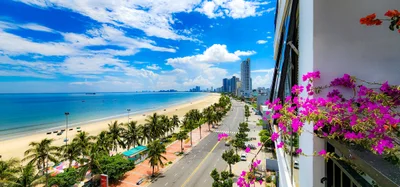
Danang is justly famous for its beaches. My Khe Beach — known as China Beach during the Vietnam War, although the name is rarely if ever used locally — to the east is the top draw, gently curving nearly 40 km south towards Hoi An. While the beach is uninterrupted, it changes names several times along the way, becoming Non Nước near the Marble Mountains, Hà My beyond that, and finally An Bàng and Cửa Đại at the Hoi An end. To the northwest of the city is another long beach variously known as Nguyễn Tất Thành and Xuân Thiều (Red Beach), running all the way up towards the Hải Vân Pass.
Although not a culinary capital like the ancient imperial capital Hue, Da Nang still has more than enough variety to keep you well fed throughout your stay. Seafood (hải sản) is popular, so you shouldn't be surprised to see plenty of fish (cá), shrimp (tôm), squid (mực), clams (nghêu), snails (ốc), the list goes on. There are many vegetarian restaurants which are listed as "Quán chay" ("vegetarian") or less frequently "Quán ăn chay" ("vegetarian restaurant"), and most are vegan. The vegetarian restaurants have a wide selection of dishes and are generally cleaner than places that are not vegetarian.
Then there are regional specialities like mì Quảng, or Quang Nam-style noodles, featuring chicken, shrimp, quail eggs, peanuts and rice crackers in a turmeric-spiced broth; bún chả cá, or rice vermicelli with fish sausage; and bún mắm, or rice vermicelli served with a strong fish sauce that's not for the weak of palate. Central Vietnamese love their food to be spicy, so be warned that the chili peppers (ớt) can be strong even if small.
Shops often operate from the ground floor of their homes, selling any number of things: coffee, bánh mì sandwiches, dry goods, clothing, SIM cards and more. Walk a little farther and you'll eventually come across a neighbourhood market where people sell fresh foods like fruits and vegetables, eggs, meat, and fish. You can do a lot of shopping but be aware that, as a foreigner, you're likely to be overcharged unless you haggle. There are an increasing number of supermarkets appearing where prices are fixed.
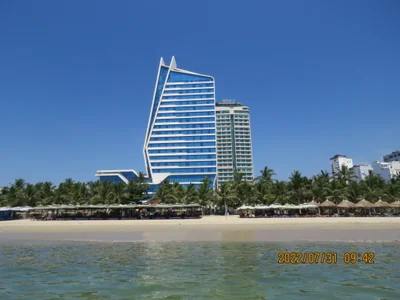
Long gone are the days when backpacker lodges nestled by the palm trees at My Khe beach. Today virtually the entire 40 kilometer stretch down to Hoi An is covered in hotels, hotels and construction sites for yet more hotels, and this is where the vast majority of visitors to the city will end up.
As a rule of thumb, hotels at the north end closer to the city are high-rise, set back from the ocean and often cramped, but offer easy access to the city and tons of eating options. The further south you go, the more spacious and resort-like they become, but getting anywhere at all will require a lengthy cab ride. Prices run the gamut, with Western brands charging a heavy premium for predictable dependability, while local hotels often cater more to local tour groups.
=
Getting there and away:
The regions surrounding Da Nang (My Son, Quang Nam) were founded by the Cham Hindus perhaps 3,000 years ago, serving as the capital city and centre of the Hindu Champa Dynasty. Vietnamese invasions into the region in the 17th century significantly halted Cham development.
Given that Da Nang was the first point of colonial invasion, many vestiges of French architecture are present in the historic buildings. Da Nang was also where American combat troops first landed during the Vietnam War, and there are also many remnants of that era left over in Da Nang. During the war, many monuments and buildings were destroyed. On the way to My Khe Beach, the ruins of a military base remain in the form of helicopter hangars; however, these are now more easily spotted at the airport, which serves both civil and military flights.
Since the early 1990s, the government has been enthusiastically pursuing foreign investment and infrastructure development, and a tourism boom exploded in the mid-2010s with rustic backpacker lodges giving way to highrise hotels. Initially driven by foreign visitors, particularly Koreans, the Vietnamese themselves have also discovered the city and during holiday periods the city gets packed.
Da Nang has some of the best roads in the country. The coast road is at least four lanes from northern provincial boundary to southern provincial boundary. Compared to either Hanoi or HCMC, traffic in Da Nang is always relatively light, although huge trucks blast through every now and again and there are brief rush hours.