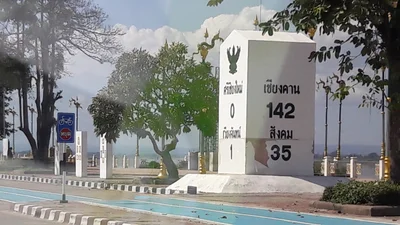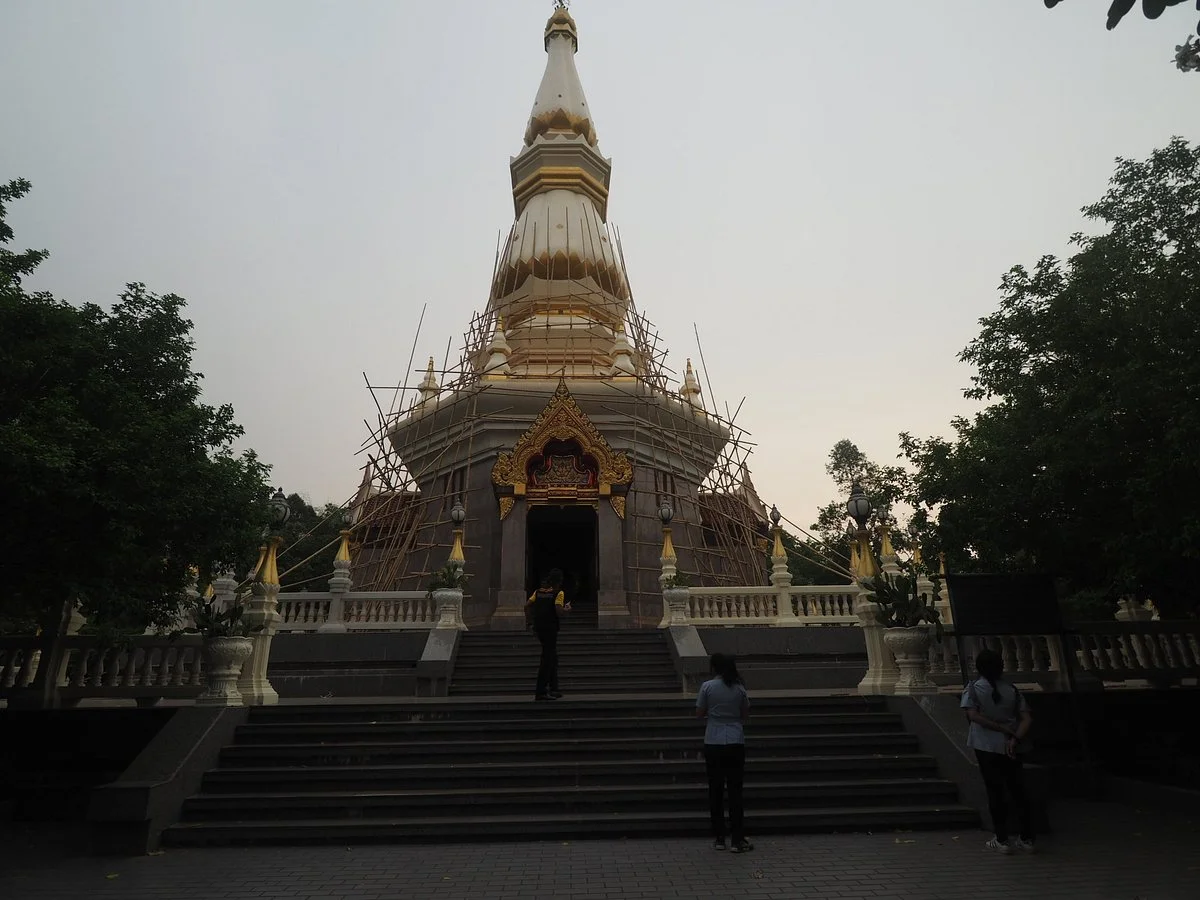
Chiang Mai is the largest city in northern Thailand, the capital of Chiang Mai province and the second largest city in Thailand. It is 700 km (435 mi) north of Bangkok in a mountainous region called the Thai highlands and has a population of 1.2 million people as of 2022, which is more than 66 percent of the total population of Chiang Mai province (1.8 million).
Chiang Mai (meaning "new city" in Thai) was founded in 1296 as the new capital of Lan Na, succeeding the former capital, Chiang Rai.: 208–209 The city's location on the Ping River (a major tributary of the Chao Phraya River) and its proximity to major trading routes contributed to its historic importance.The city (thesaban nakhon, "city municipality") of Chiang Mai officially only covers most parts (40,2 km²) of the Mueang Chiang Mai district in the city centre and has a population of 127,000. This census area dates back to 1983 when Chiang Mai's municipal area was enlarged for the first and last time since becoming the first City Municipality in Thailand (then under Siam) in 1935. The city's sprawl has since extended into several neighboring districts, from Hang Dong in the south, to Mae Rim in the north, and Suthep in the west, to San Kamphaeng in the east, forming the Chiang Mai urban area with over a million residents. The city municipality is subdivided into four khwaeng (electoral wards): Nakhon Ping, Sriwichai, Mengrai, and Kawila. The first three are on the west bank of the Ping River, and Kawila is on the east bank. Nakhon Ping District includes the northern part of the city. Sriwichai, Mengrai, and Kawila consist of the western, southern, and eastern parts, respectively. The city center—within the city walls—is mostly within Sriwichai ward.
=
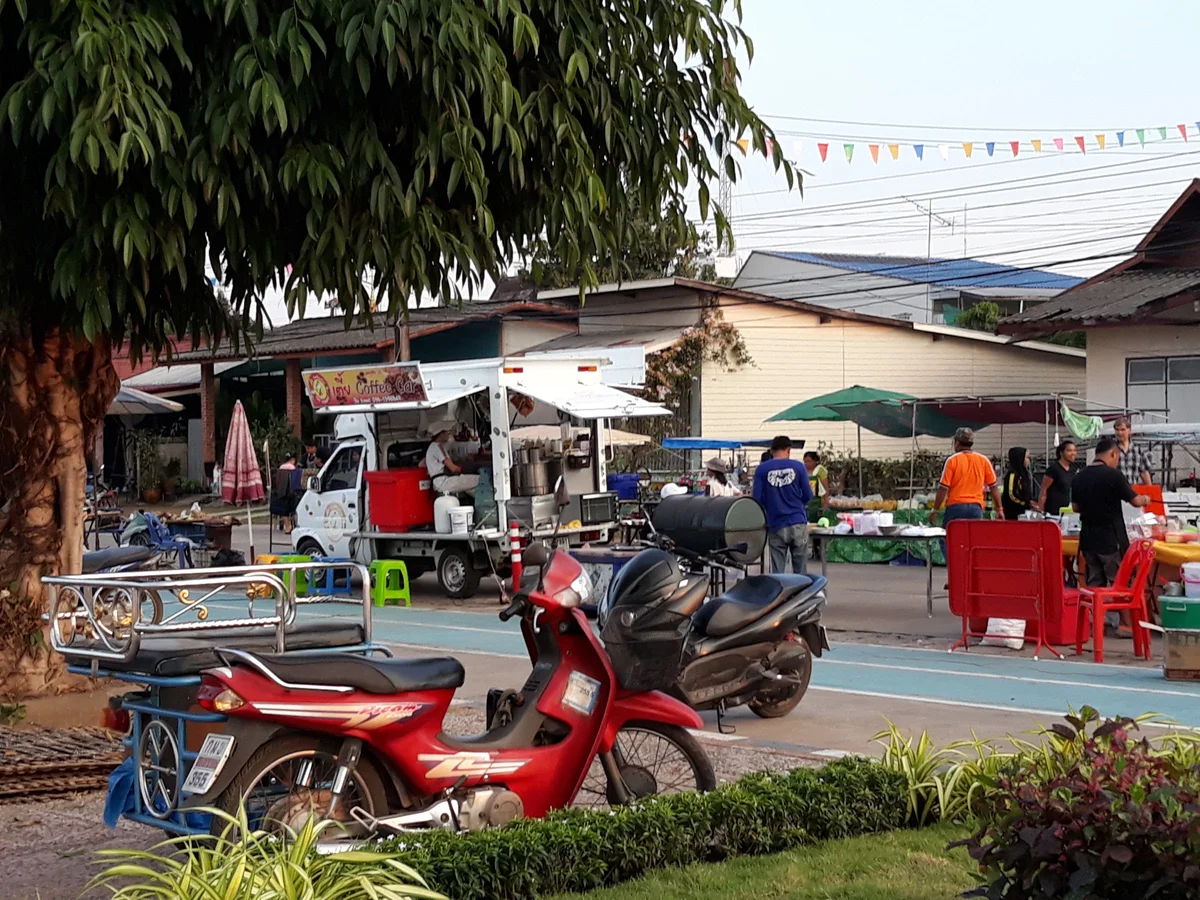
Chiang Mai's restaurants offer a wide range of food, second only to Bangkok. Naturally it's a good place to sample northern Thai food: in particular, hunt down some khao soi, yellow wheat noodles in curry broth, traditionally served with chicken (kai) or beef (nuea), but available some places as vegetarian or with seafood. Another local specialty is hang ley, Lanna-style pork curry. The area is also a home to a type of pork sausage called sai ua, which is favoured using chilli and various Thai herbs such as lemongrass, galangal and Kaffir lime. For those tired of eating rice or noodles there's also a wide range of excellent international food restaurants, from cheap hamburger stands to elaborate Italian restaurants.
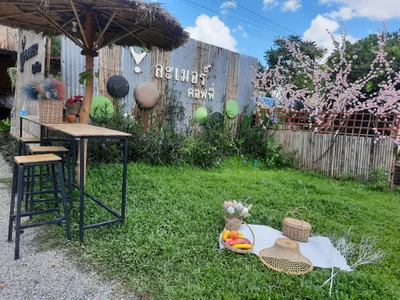
When you come to Chiang Mai you should try a khantoke dinner and show. Although these are just for tourists it is still a nice way to spend an evening. The first khantoke dinner was held in 1953 by Professor Kraisi Nimanhemin who wanted to host a special event for 2 friends leaving Chiang Mai. Two more such dinners were held, both in 1953, thus "khantoke" dinners are not "historic", but rather a relatively recent invention. Khantoke literally means small bowl, low table (khan = small bowl. tok = low table) There are also many garden restaurants where you can enjoy an excellent Thai meal in a beautiful setting.
The range and value of Western food in Chiang Mai is unsurpassed in Northern Thailand and there is a full range of restaurants from Australian/British/Irish, through French and German to Italian, Spanish, American and Mexican. Considering how remote Chiang Mai is from the major centres of population in Asia, there are a remarkable number of Western restaurants.
It can be hard to find strictly vegetarian food in Chiang Mai, as fish and oyster sauce are used frequently, and the local Buddhist monks themselves often eat fish. Thus, asking for your dish to be prepared "like the monks", which works in other places, does not get the same results in Chiang Mai. There are a few completely vegetarian options.
Chiang Mai's nightlife is the most happening in the north, although still a far cry from Bangkok's hot spots. The busiest night life zones are near Tha Phae Gate, Loi Kroh Rd and along Charoen Rat Rd on the east bank of the Ping River.
Chiang Mai is a great place to shop. Sprawling markets during the day and night carry items from cheap trinkets to skillfully made local crafts.
Accommodation in Chiang Mai is generally cheap, even by Thai standards. All types of lodging are available from inexpensive guest-houses with little or no service to the typical high rise hotels and elaborate garden resorts. The latest boom is Thai-style boutique resorts located near the old city centre — several have been built since mid-2005, and offer excellent service in quiet garden settings; most are fairly small with as few as 8 rooms and a pool, and are decorated with Thai crafts and antiques.
Evenings in Chiang Mai are cooler than Bangkok and the south during the dry season, so air conditioning may be less of a priority.
Some of the cheapest accommodation may refuse guests who are not also booking a trekking package. If so, please remove them from Wikivoyage.
Founded in 1296 CE, Chiang Mai is a culturally and historically interesting city, at one time the capital of the ancient Lanna kingdom. In the rolling foothills of the Himalayas 700 km north of Bangkok, until the 1920s it could only be reached by an arduous river journey or an elephant trek. This isolation helped preserve Chiang Mai's distinctive charm, which remains intact.
Chiang Mai's historical centre is the walled city ("city" is chiang in the northern Thai dialect while mai is "new", hence Chiang Mai translates as "new city"). Sections of the wall dating to their restoration a few decades ago remain at the gates and corners, but of the rest only the moat remains.
Inside Chiang Mai's remaining city walls are more than 30 temples dating back to the founding of the principality, in a combination of Burmese, Sri Lankan, and Lanna Thai styles, decorated with beautiful wood carvings, Naga staircases, leonine and angelic guardians, gilded umbrellas and pagodas laced with gold filigree. The most famous is Wat Phrathat Doi Suthep, which overlooks the city from a mountainside 13 km away.
Modern-day Chiang Mai has expanded in all directions, but particularly to the east to the banks of the Ping River (Mae Nam Ping), where Changklan Rd, the famous Night Bazaar, and the bulk of Chiang Mai's hotels and guest houses are located. Loi Kroh Rd (ถนนลอยเคราะห์) is the centre of the city's (tourist) night life.
Locals say you've not experienced Chiang Mai until you've seen the view from Doi Suthep, eaten a bowl of kao soi and purchased an umbrella from Bo Sang. Of course this is touristic blather, but kao soi, Bo Sang umbrellas and Doi Suthep are important cultural icons for the locals.