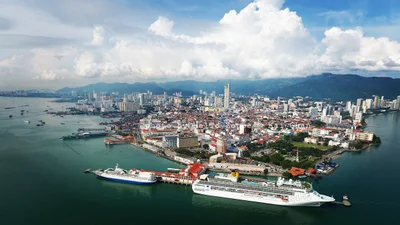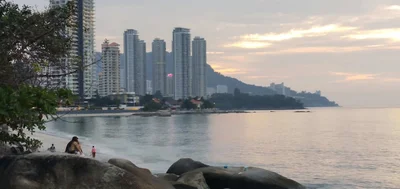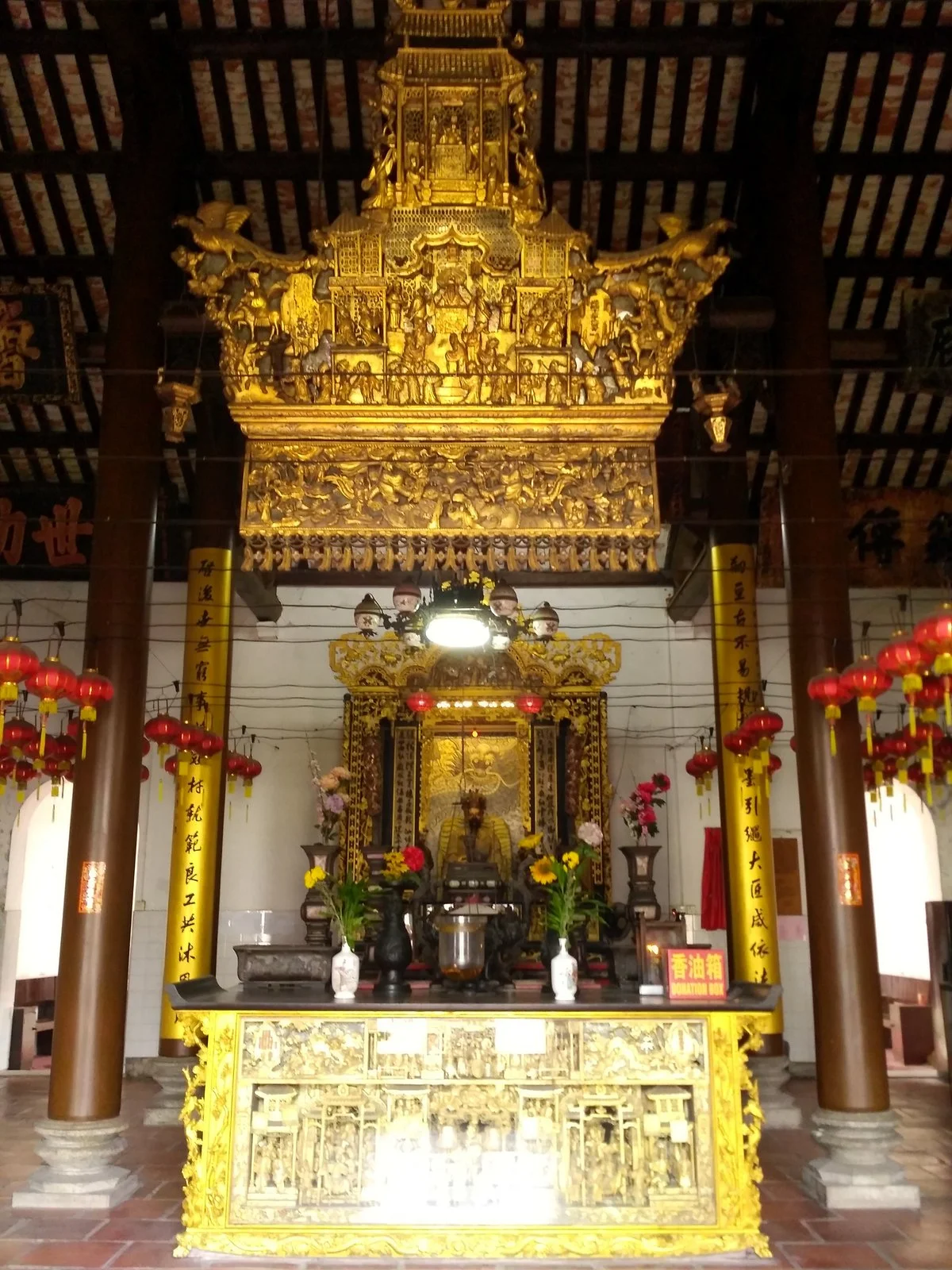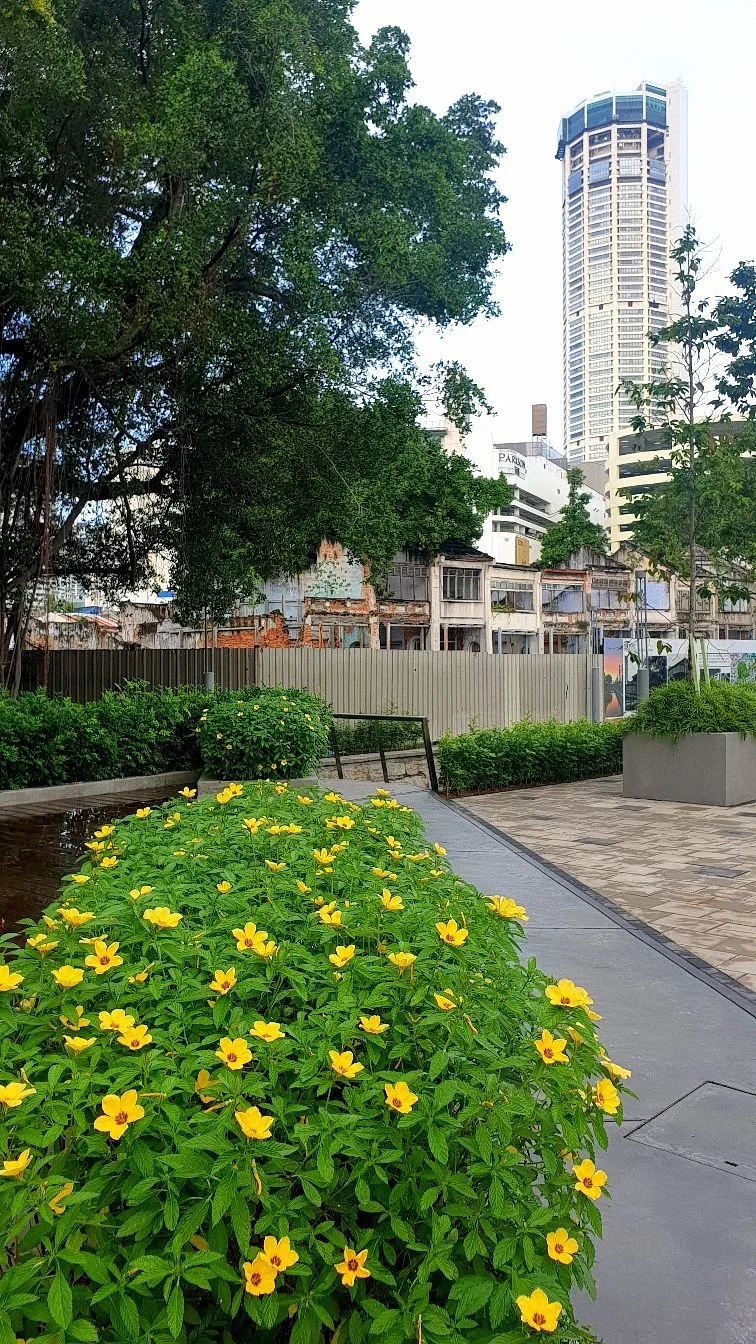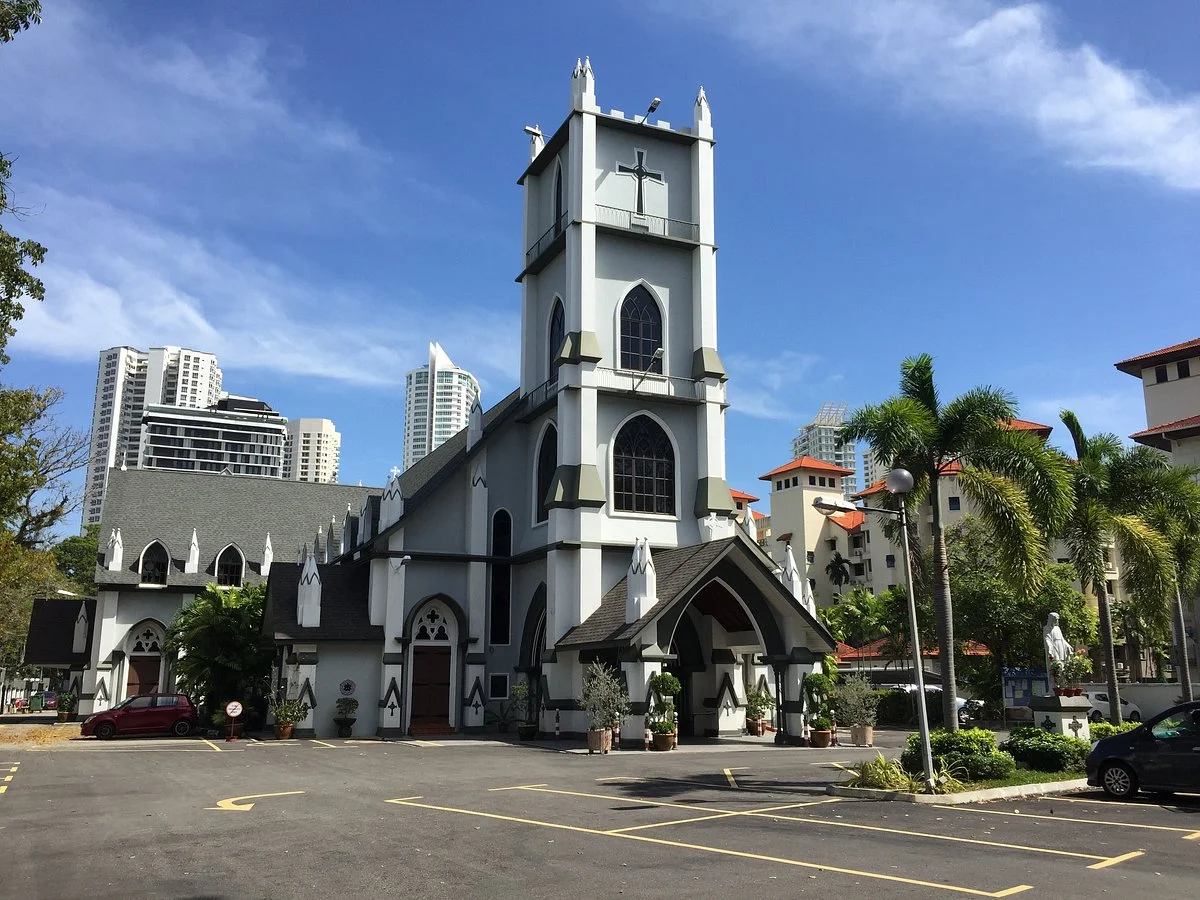
George Town is the capital of the Malaysian state of Penang. It is the core city of the George Town Conurbation, Malaysia's second largest metropolitan area with a population of 2.84 million and the second highest contributor to the country's GDP. The city proper spans an area of 306 km2 (118 sq mi) encompassing Penang Island and surrounding islets, and had a population of 794,313 as of 2020.
Initially established as an entrepôt by Francis Light in 1786, George Town serves as the commercial centre for northern Malaysia. According to Euromonitor International and the Economist Intelligence Unit, it has the highest potential for revenue growth among all Malaysian cities and contributed nearly 8% of the country's personal disposable income in 2015, second only to the national capital, Kuala Lumpur. Its technological sector, anchored by hundreds of multinational companies, has made George Town the top exporter in the country. The Penang International Airport links George Town to several regional cities, while a ferry service and two road bridges connect the city to the rest of Peninsular Malaysia. Swettenham Pier is the busiest cruise terminal in the country.
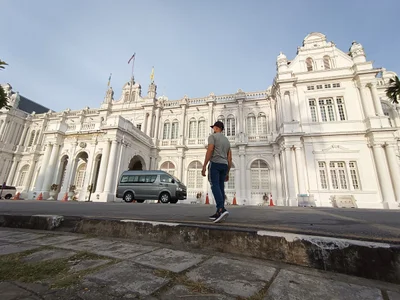
George Town was the first British settlement in Southeast Asia and its proximity to maritime routes along the Strait of Malacca attracted an influx of immigrants from various parts of Asia. Following rapid growth in its early years, it became the capital of the Straits Settlements in 1826, only to lose its administrative status to Singapore in 1832. The Straits Settlements became a British crown colony in 1867. Shortly before Malaya attained independence from Britain in 1957, George Town was declared a city by Queen Elizabeth II, making it the first city in the country's history. In 1974, George Town was merged with the rest of the island, throwing its city status into doubt until 2015, when its jurisdiction was reinstated and expanded to cover the entire island and adjacent islets.
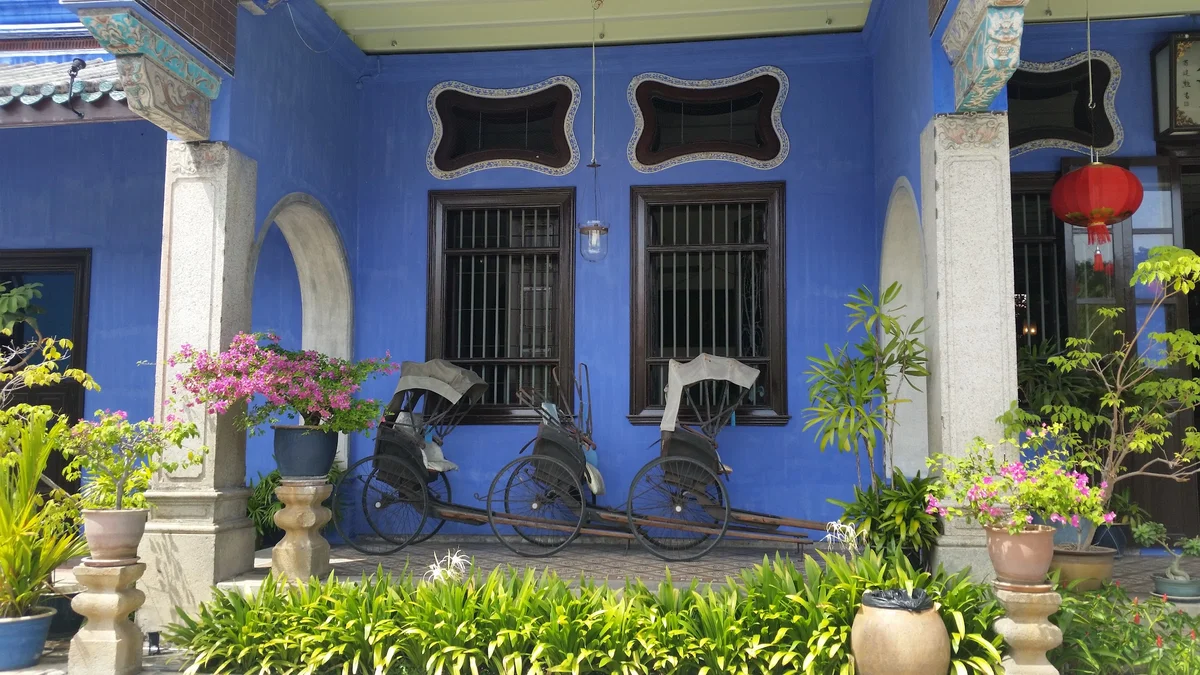
The city is described by UNESCO as having a "unique architectural and cultural townscape" that is shaped by centuries of intermingling between various cultures and religions. It has also gained a reputation as Malaysia's gastronomical capital for its distinct culinary scene. The preservation of these cultures contribute to the city centre's designation as a UNESCO World Heritage Site since 2008.
{ "type": "FeatureCollection", "features": [ { "type": "Feature", "properties": , "geometry": {"type": "Point", "coordinates": [100.33715,5.41537] , { "type": "Feature", "properties": , "geometry": {"type": "Point", "coordinates": [100.33758,5.41518] , { "type": "Feature", "properties": , "geometry": {"type": "Point", "coordinates": [100.33759,5.41521] , { "type": "Feature", "properties": , "geometry": {"type": "Point", "coordinates": [100.3382,5.4146] , { "type": "Feature", "properties": , "geometry": {"type": "Point", "coordinates": [100.33662,5.41481] , { "type": "Feature", "properties": , "geometry": {"type": "Point", "coordinates": [100.33656,5.41469] , { "type": "Feature", "properties": , "geometry": {"type": "Point", "coordinates": [100.33960,5.41530] , { "type": "Feature", "properties": , "geometry": {"type": "Point", "coordinates": [100.33449,5.41898] , { "type": "Feature", "properties": , "geometry": {"type": "Point", "coordinates": [100.33452,5.41903] , { "type": "Feature", "properties": , "geometry": {"type": "Point", "coordinates": [100.33921,5.41486] , { "type": "Feature", "properties": , "geometry": {"type": "Point", "coordinates": [100.33887,5.41523] , { "type": "Feature", "properties": , "geometry": {"type": "Point", "coordinates": [100.33796,5.41614] ,
{ "type": "Feature", "properties": , "geometry": {"type": "Point", "coordinates": [100.33731,5.41527] , { "type": "Feature", "properties": , "geometry": {"type": "Point", "coordinates": [100.34050,5.41409] , { "type": "Feature", "properties": , "geometry": {"type": "Point", "coordinates": [100.33902,5.41361] , { "type": "Feature", "properties": , "geometry": {"type": "Point", "coordinates": [100.33752,5.41524] , { "type": "Feature", "properties": , "geometry": {"type": "Point", "coordinates": [100.34071,5.41424] , { "type": "Feature", "properties": , "geometry": {"type": "Point", "coordinates": [100.33895,5.41388] , { "type": "Feature", "properties": , "geometry": {"type": "Point", "coordinates": [100.33650,5.41464] , { "type": "Feature", "properties": , "geometry": {"type": "Point", "coordinates": [100.33966,5.41505] ,
{ "type": "Feature", "properties": , "geometry":
See Penang for attractions in the rest of the state; this list covers only sights in George Town.
Thanks to the UNESCO World Heritage Site listing and strict zoning laws within the historic core of George Town, a combination of historical buildings and gently crumbling, but largely intact, shophouses offer a glimpse into the city's past. It may be worthwhile engaging a walking tour guide as they are trained to give in-depth details on the history and culture of heritage sites. There are several themed walking guides to choose from and each typically takes around 3 hours. Book ahead.
Graffiti has become all the rage in George Town, after Lithuanian artist, Ernest Zacharevic, painted several whimsical murals of the city's lifestyle and history, such as the pensive Boy on a Bike and the cheerful Little Children on a Bicycle on the walls of old buildings as part of the George Town Festival in 2012. Since then, many more wall paintings have popped up around the city, grabbing the attention of passers-by. Wire art has also been widely installed by the heritage board, commemorating bits and pieces of Penang history with pithy quotes. An informative map is available from the visitor centre.
Besides enjoying excellent food, walking tours and sightseeing the beautiful old city, George Town offers various modern entertainment options to the discerning tourist. If you, tired of walking, want to kill a couple of hours there is the possibility of catching a movie at any of the several shopping malls in the city centre, including 1st Avenue, Gurney Plaza and Gurney Paragon. Some shopping malls, notably Gurney Plaza and Queensbay Mall contain other forms of entertainment as well, such as karaoke, laser tag and escape games.
Many George Town shops now offer bike rentals for RM10/day, as travellers embark on a street art trail of sorts, cycling around main roads and hidden back lanes to look at murals and wire art. Bicycle pathways have been painted throughout the city, making it safer for cyclists and pedestrians alike.
Penang is widely considered to be the food capital of Malaysia, and George Town is the best place in Penang to eat. (See Penang for listings of local dishes.)
Gurney Drive may be the main location where tourists go to have their food, but that does not necessarily mean that the best food can be found there. In fact, most locals consider it to be overrated and expensive. A variety of Chinese food courts, and Durian stalls, can be found in Jalan Macalister between the crossing with Jalan Penang and number 105. It's best to ask the locals to point you toward the best locations for food, though walking into any "coffee shop" or stall would almost certainly guarantee a worthwhile experience for your taste buds. Knowing some Malay or Hokkien will be useful, but most vendors speak enough English to communicate the basics.
Markets remain a daily way of life in Penang, and locals often go to them to buy cheap accessories and fresh food. Bargain hard to get a good price and preferably get a local to accompany you. George Town's retail scene is complemented by several modern shopping malls as well, with some offering various entertainment options.
Founded in 1786 by British trader Francis Light, George Town was part of the British crown colony of the Straits Settlements, along with Malacca and Singapore. Similar to Singapore, George Town evolved from a swampy island into a bustling entrepôt, and came under direct British rule (as opposed to the rest of the Malay Peninsula under indirect British influence). These gave Singapore and George Town distinctive British colonial characteristics and truly multicultural demographics consisting of the Malays, Chinese, Peranakans, Indians, Eurasians, Siamese, Europeans and others.
George Town was granted city status in 1957 and became the first city within the newly-independent Federation of Malaya (now Malaysia). In the decades after independence, however, George Town faced economic decline when the Malaysian government revoked the city's free port status in the late 1960s. Under the administration of Chief Minister Lim Chong Eu, the city's economy gradually reoriented towards manufacturing, with Bayan Lepas being earmarked for an eponymous industrial zone which attracted various multinational firms, particularly the semiconductor industry. As a result, George Town is now regarded as the "Silicon Valley of the East". Rapid development of George Town has been underpinned by its appeal as a haven for tourist and expatriates, helped by the UNESCO World Heritage Site within the city centre and the city's reputation as the centre of medical tourism within Malaysia.
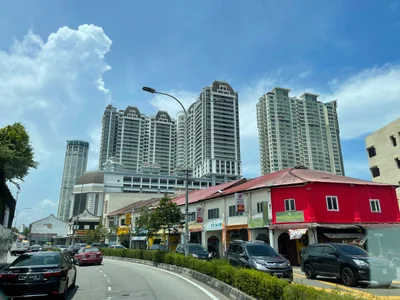
The city retains its heritage and diverse cultures, and is home to one of the best preserved collections of pre-war heritage buildings in Southeast Asia. Unlike Kuala Lumpur, where many heritage buildings faced demolition to make way for the concrete jungle, George Town's heritage shophouses are also being given a new lease of life as hotels, bars, cafes and restaurants. Traditional trades still operate out of some of these shophouses, alongside bustling street markets and hawkers. Indeed, in this aspect, George Town is often likened to Singapore in the 1960s and 70s.
George Town has a rather relaxed pace of life, which made the city attractive for expatriates and foreign retirees, especially from Britain, Australia, the United States, Japan and Singapore. The city's ease of living is underpinned by its modern amenities, hospitals and shopping centres, as well as a burgeoning fine dining scene. In addition, urban dwellers and tourists alike have the option of escaping to the beaches or the forested hills, all of which are within easy reach. Increasingly, traffic congestion and the construction of new highways are changing the face of many parts of the island with the northern coastal fringe and the routes connecting Bayan Lepas to the city centre particularly badly affected at peak times. There has been intense debate between the politicians and town planners on one side, and conservationists and community groups on the other. The latter fear that unbridled expansion is changing the face of Penang and spoiling its unique character.