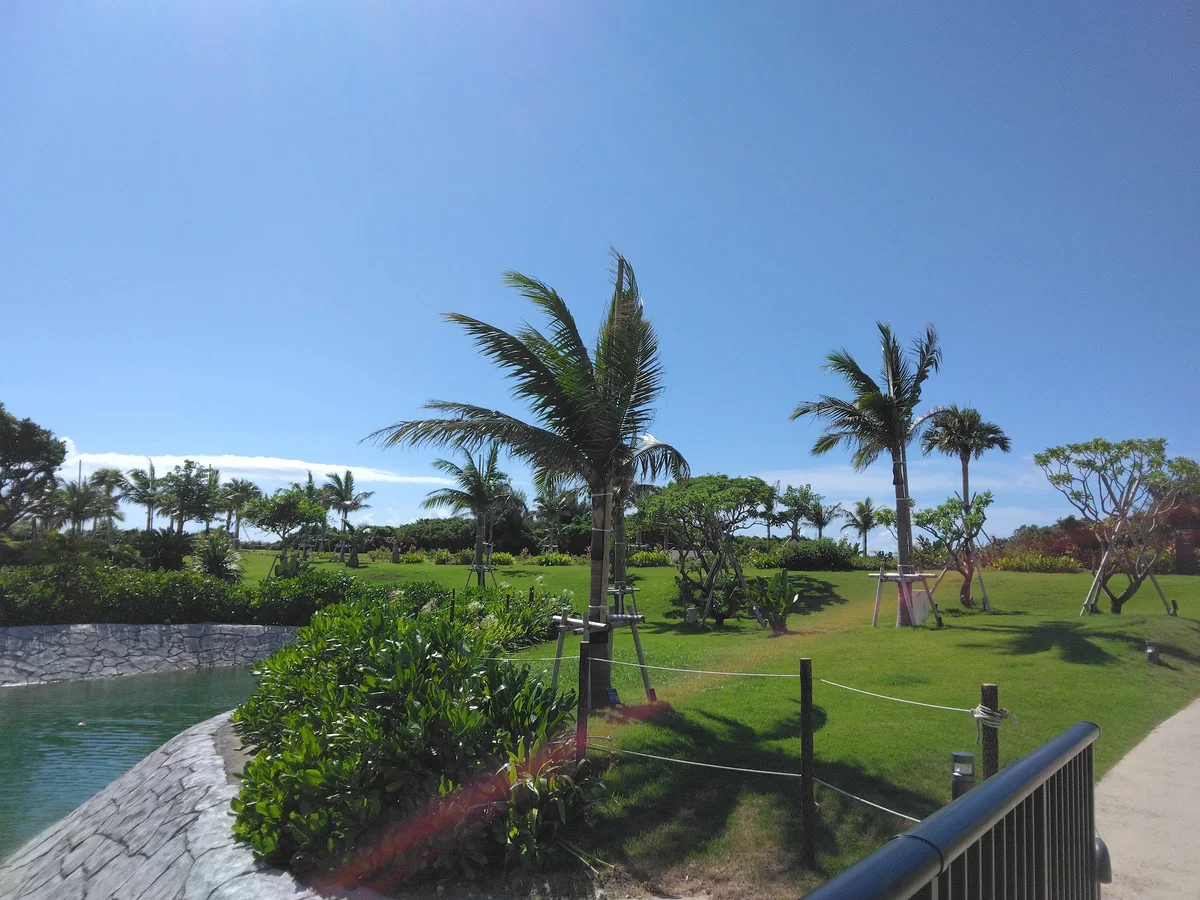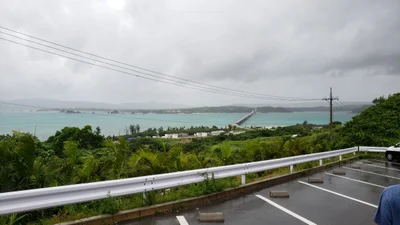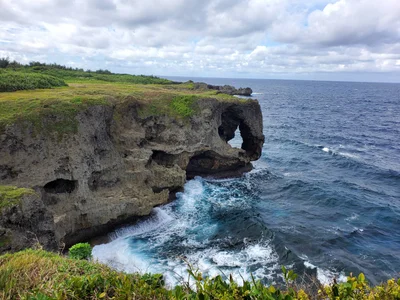
Okinawa Prefecture (Japanese: 沖縄県, Hepburn: Okinawa-ken) is the southernmost and westernmost prefecture of Japan. It has a population of 1,457,162 (as of 2 February 2020) and a geographic area of 2,281 km2 (880 sq mi).
Naha is the capital and largest city, with other major cities including Okinawa, Uruma, and Urasoe. Okinawa Prefecture encompasses two thirds of the Ryukyu Islands, including the Okinawa, Daitō and Sakishima groups, extending 1,000 kilometres (620 mi) southwest from the Satsunan Islands of Kagoshima Prefecture to Taiwan (Hualien and Yilan Counties). Okinawa Prefecture's largest island, Okinawa Island, is the home to a majority of Okinawa's population. Okinawa's indigenous ethnic group is the Ryukyuan people, who also live in the Amami Islands of Kagoshima Prefecture.
Okinawa was ruled by the Ryukyu Kingdom from 1429 and unofficially annexed by Japan after the Invasion of Ryukyu in 1609. Okinawa was officially founded in 1879 by the Empire of Japan after seven years as the Ryukyu Domain, the last domain of the Han system. Okinawa was occupied by the United States during the Allied occupation of Japan after World War II and was governed by the Military Government of the Ryukyu Islands from 1945 to 1950 and Civil Administration of the Ryukyu Islands from 1950 until the prefecture was returned to Japan in 1972. Okinawa comprises just 0.6 percent of Japan's total land mass, but about 26,000 (75%) of United States Forces Japan personnel are assigned to the prefecture; the continued U.S. military presence in Okinawa is controversial.
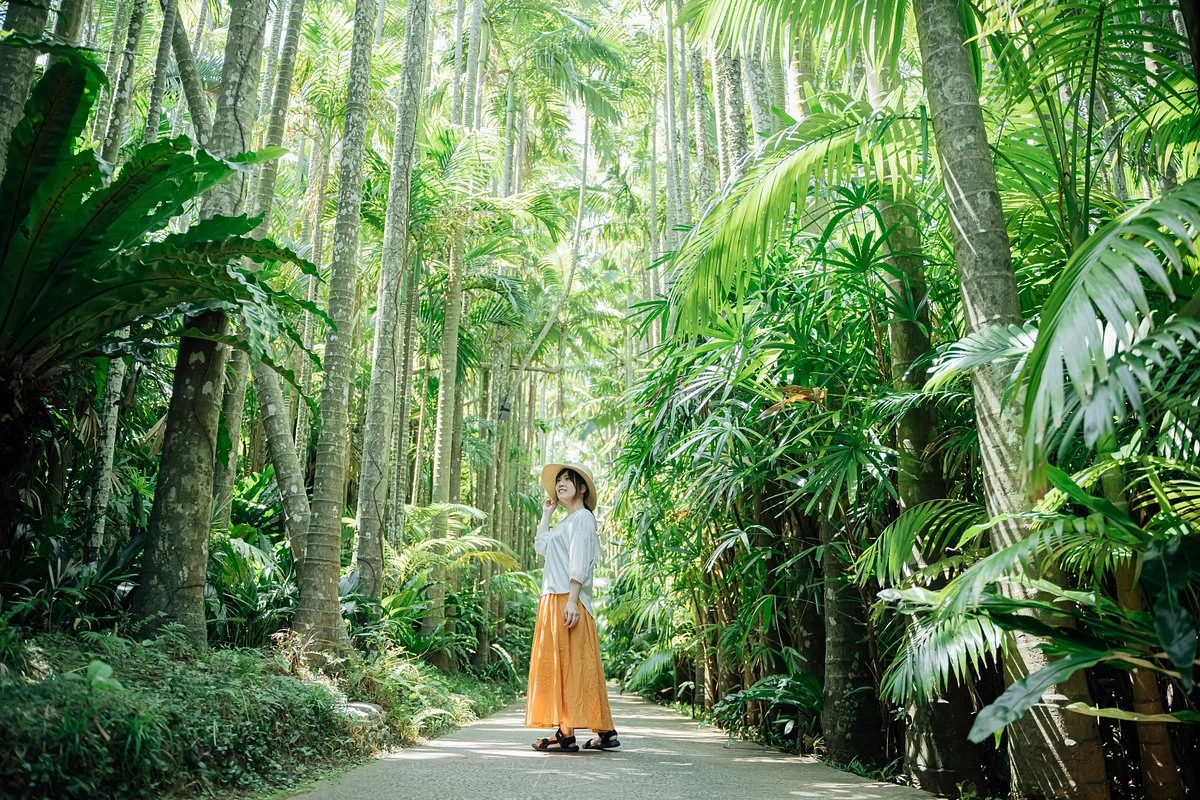
Most people come to Okinawa for the sun and beaches. Even in midwinter, when many areas of the mainland Japan teeter around the freezing point, temperatures rarely dip below 15°C in Okinawa. For more adventurous types, the vast yet almost uninhabited island of Iriomote is covered in dense jungle.
Cultural attractions are rather more limited, as the Japanese invasion and subsequent brutal colonization coupled with fighting in World War II did a regrettably thorough job of eliminating most traces of the Ryukyu Kingdom.
Historical sites related to World War II can be found throughout the islands, especially the main island of Okinawa, including the Peace Memorial Park in Itoman, the navy's former underground headquarters and the Himeyuri Monument.
Okinawa is the best place in Japan for all sorts of watersports.
Okinawan cuisine is distinctly different from that of mainland Japan. Unlike the simplicity of classical Japanese food, which tries to highlight individual ingredients, Okinawan cuisine mixes lots of ingredients in a single dish to create complex, balanced flavors. Indeed, Okinawa's most famous dish is chanpurū (from the Malay word campur, meaning "mix"), a stir-fry of tofu with multiple vegetables and meats. Thanks to Chinese influence, Okinawans too proudly proclaim that they use every part of the pig except the squeal, and pork makes an appearance in almost every dish, including bits like ears, trotters and blood which are generally disdained by the Japanese. Even Spam has a distinct following.
Other Okinawan ingredients include vegetables rarely seen on the Japanese mainland such as bitter melon (ゴーヤー gōyā) and purple yam (紫芋 murasaki-imo). Local seaweeds like the gloopy mozuku (モズク), often served in vinegar or mixed into porridge, or fluffy green āsa (アーサ), hiding in soups, often get credit for Okinawans' life expectancy, the longest in the world. While Okinawan dishes rarely contain chilies, there's often a bottle of kōrēgusu (コーレーグス), chilies steeped in awamori rice liquor (see Drink), on the table so you can spice things up according to taste — a little goes a long way.
Okinawan tropical fruits including mango, papaya, pineapple, dragonfruit and the sour lime-like calamansi (シークァーサー shīkwāsā) are delicious when in season. Dark cane sugar (黒砂糖 kurozatō) is also a popular snack, eaten both as is and made into a vast variety of candies and pastries.
Image:Goya Chanpuru Large.JPG|A small gōyā gourd (front) and a scoop of gōyā chanpurū (back) File:Soki Soba at Takenoko.jpg|Sōki soba noodles File:Fried Gurukun at Yumenoya.jpg|Deep-fried slices of gurukun fish Image:JP-47 Naha Tacorice.jpg|Taco rice File:Shima-dofu at Yumenoya.jpg|Shima-dōfu (island tofu) with sesame dressing Image:JP-47 Mimiga and Chiraga.jpg|Mimigā (pig ear... mimi=ear & gā=pig) and Chiragā (pig face) Image:JP-47_Sukugarasu_on_Shima-Tofu.jpg|Sukugarasu on tofu File:Koregusu at Ten to Ten in Naha, Okinawa.jpg|Kōrēgusu chili sauce Image:Umibudou.JPG|Umibudō (sea grapes) Image:サーターアンダギー3.jpg|Sātāandagī donuts
Some dishes worth trying:
Okinawan chinmi or "strange foods", eaten as snacks with drinking, include:
Aficionados of American fast food may find Okinawa to be a curious treat, as many American restaurants popped up here to serve the US military long before they made it to the mainland. Most prominent is the presence of A&W outlets serving hamburgers and root beer (with free refills, even), available practically nowhere else in Japan. Blue Seal ice cream is common, with their purple yam soft ice creams worth a lick. Several hybrid Okinawan-American dishes, most of which seem to employ copious quantities of Spam, are widely available:
The local brew of choice is awamori (泡盛), a notoriously strong rice liquor that can contain up to 60% alcohol, although 30-40% is more common. Unlike Japanese shochu, which is usually prepared from potatoes or barley, awamori is brewed using imported Thai jasmine rice since during the days of the Ryukyu Kingdom, short-grain rice could not be brought in from the main islands. It's most commonly drunk on the rocks or neat.
Awamori keeps well, and when stored more than three years is known as kūsu (古酒, also read koshu in standard Japanese). If the label indicates a specific age, it's 100% at least that old; however, kūsu without a given age is usually a blend of 50% 3-year-old and 50% new awamori.
If awamori is a bit too strong for your taste, try awamori umeshu (泡盛梅酒), a delectable sweet liquor made by infusing Japanese ume plums in awamori and cane sugar. Lemon and coffee-flavored versions of awamori are also available.
Okinawa's local beer Orion is a safer alternative, at least in small quantities. Most larger islands also have their own microbreweries.
No information available
Broadly speaking, accommodation on Okinawa can be divided into two brackets: cheap basic lodges, and expensive fancy resorts. Another option is sleeping in campsites.
= Most visitors arrive in Naha, the capital of Okinawa, which is also well served by low-cost carriers like Skymark and Jetstar. Domestic flights do connect major Japanese cities directly to some other Okinawan islands like Miyako and Ishigaki, but prices can be steep; for example, the standard one-way fare for Tokyo-Ishigaki is a whopping ¥50,000. You can save a considerable amount of money by making use of ANA's Visit Japan or JAL's Welcome to Japan fares, both of which allow domestic flights in Japan for ¥14,040. Low-cost carriers like Peach can also offer good fares if booked in advance.
Naha is also served by some international flights to other Asian cities. If you are coming from elsewhere, consider connecting in Taipei instead, as Naha is geographically closer to Taipei than to Tokyo.
Ferry and air connections link the islands together, but many of them are simply so small in population that scheduled services may be infrequent and prices vary.