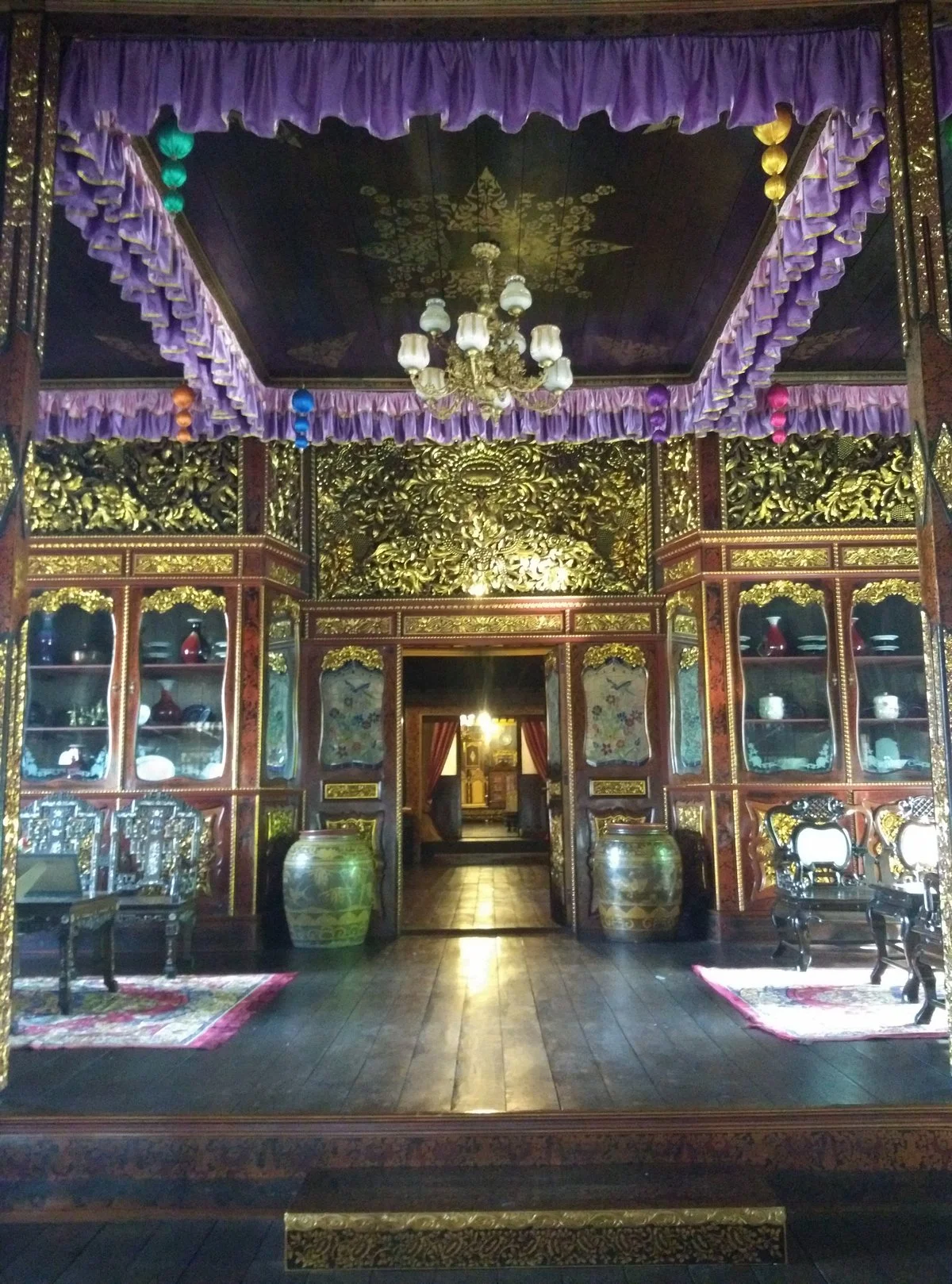
Palembang (Indonesian pronunciation: [paˈlɛmbaŋ], Palembang: Pelémbang, Jawi: ڤليمبڠ) is the capital city of the Indonesian province of South Sumatra. The city proper covers 352.51 square kilometres (136.10 square miles) on both banks of the Musi River in the eastern lowlands of southern Sumatra. It had a population of 1,668,848 at the 2020 Census; the official estimate as at mid 2022 was 1,729,546 (comprising 865,942 males and 863,604 females). Palembang is the second most populous city in Sumatra, after Medan, and the twelfth most populous city in Indonesia.
The Palembang metropolitan area has an estimated population of more than 2.7 million in 2022. It comprises parts of regencies surrounding the city, including Banyuasin, Ogan Ilir, and Ogan Komering Ilir.
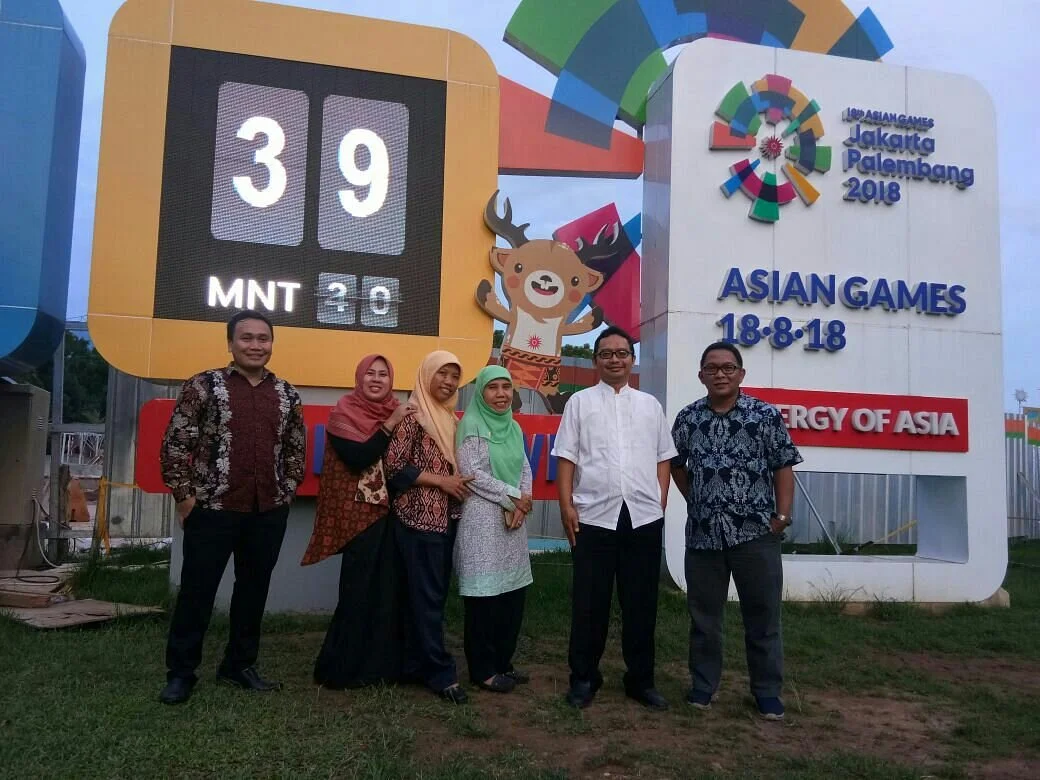
Palembang was the capital of Srivijaya, a Buddhist kingdom that ruled much of the western Indonesian Archipelago and controlled many maritime trade routes, including the Strait of Malacca.Palembang was incorporated into the Dutch East Indies in 1825 after the abolition of the Palembang Sultanate. It was chartered as a city on 1 April 1906.Palembang was the host city of the 2011 Southeast Asian Games and the 2018 Asian Games along with Jakarta. The first light rail system in Indonesia was operated in Palembang in July 2018.The city attracted 2,011,417 tourists in 2017, including 9,850 foreign tourists. Traffic jams, floods, slums, pollution, and peatland fire are problems in Palembang.
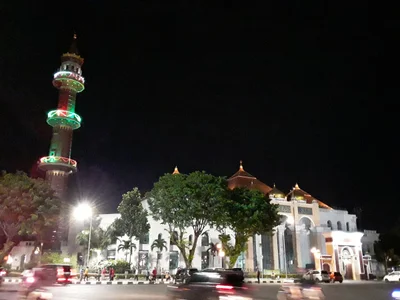
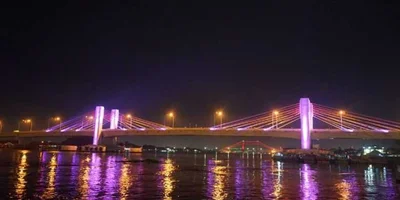
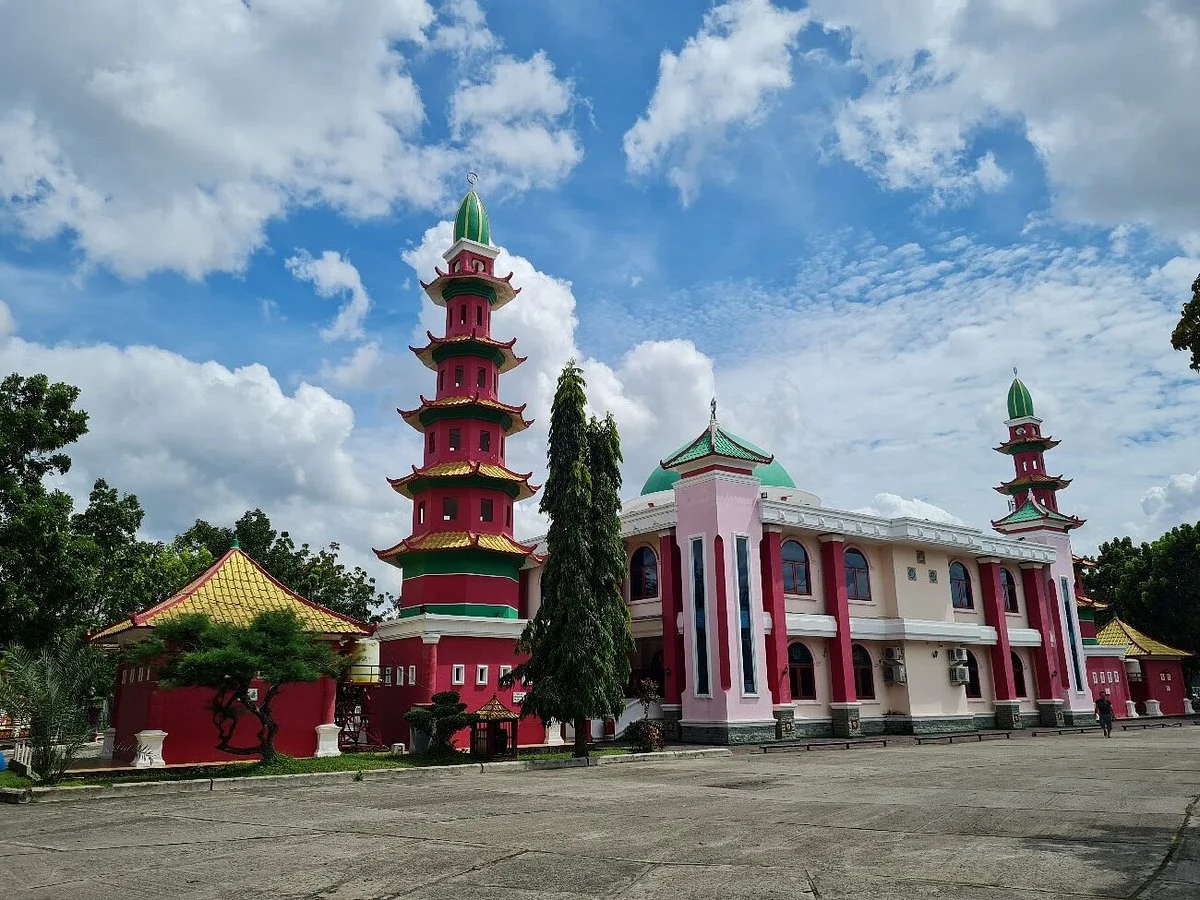
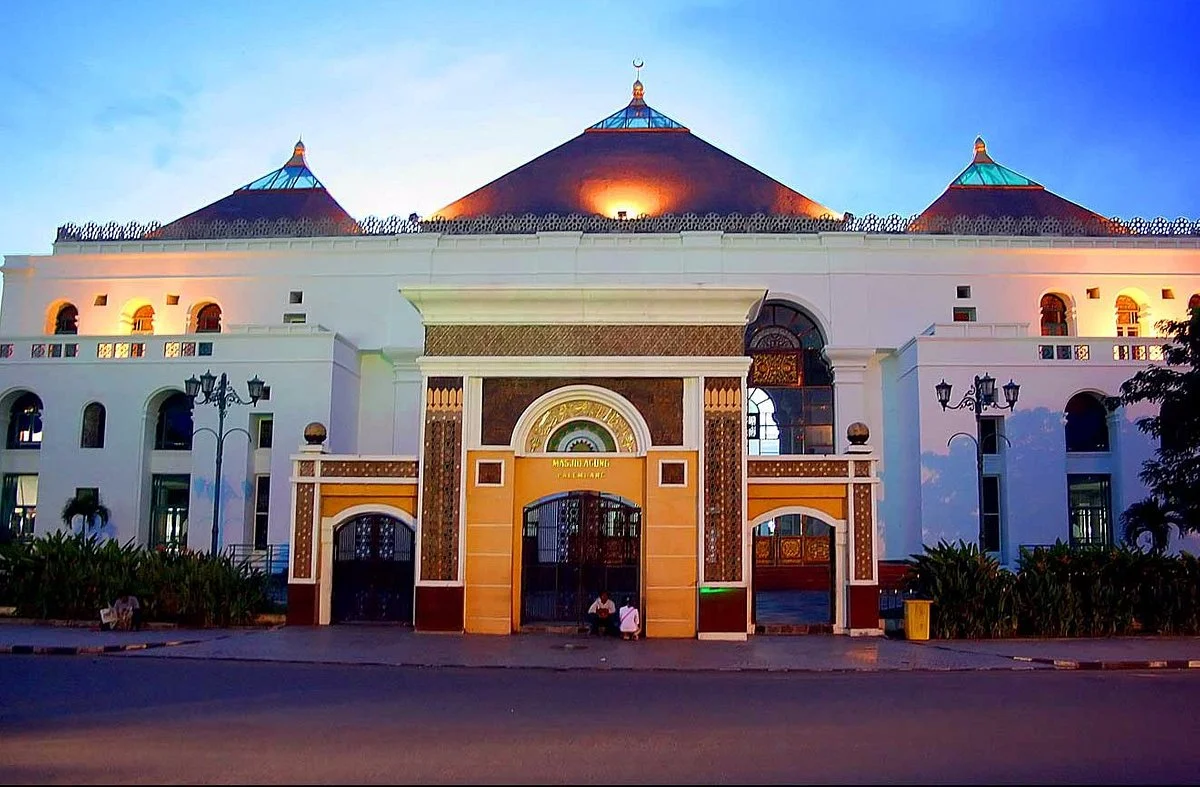
| ph | tollfree= | hours=Open 24 hours | price=Free of charge | wikipedia=Ampera Bridge | image=Ampera Bridge, Palembang.jpg | wikidata=Q643147 | lastedit=2024-04-07 | cThe first bridge to cross the Musi River in Palembang, and was the longest in Indonesia when it first opened in 1965. Originally a vertical-lift bascule bridge, its central span stopped being lifted only several years after opening. The bridge is the most prominent landmark in Palembang, being located right at its heart, connecting the two sides of Musi River. }} | ph | tollfree= | hours= | price= Free of charge | wikipedia=Great Mosque of Palembang | wikidata=Q14917382 | lastedit=2024-04-07 | cThis grand mosque was first opened in 1748, and has been renovated and significantly expanded a few times. The original praying hall and minaret is located on the northwestern side of the compound, showcasing a mix between Palembang Malay, Chinese, and European architectural styles. The expanded praying hall is built around the original building with pyramidal roofs as well as a taller and slimmer minaret. }} | ph | tollfree= | hours=06:00–22:00 | price=Free of charge for the plaza area | wikipedia=Kuto Besak | image=Kutobesak.jpg | wikidata=Q16773690 | lastedit=2024-04-07 | cA walled compound from the Sultanate era on the northern side of Musi River. Originally completed in 1797, it is now used as the headquarter for the regional command of the Indonesian National Forces. The compound is closed to public due to its military use, though an enourmous open plaza right in front of it functions as the city's main square. On the plaza there lies the , dedicated towards a protected endemic species that used to be the main ingredient in local delicacies.}} | ph | tollfree= | hours= | price= | wikipedia=Palembang Mayoral Office | image=Palembang Mayor Office.jpg | wikidata=Q23009349 | lastedit=2024-04-08 | cFirst built in the early 20th century to serve a dual function as both a water tower and a city hall. It now hosts the city's mayoral office. }} }}
| ph | tollfree= | hours= | price=Free of charge, though you will need to pay for parking if you bring personal vehicles | wikidata=Q17051742 | wikipedia = Jakabaring Sport City | cThe sports complex with its grand Gelora Sriwijaya Stadium hosted parts of the 2011 Southeast Asian Games and the 2018 Asian Games. On Sunday morning it is a popular spot for locals to converge, do jogging or exercise. }} | ph | tollfree= | hours= | price=Free of charge | cA major urban park consisting of a large pond surrounded by vegetations and a nearby smaller pond. Every Sunday morning the streets around the park are closed to traffic, giving space for pedestrians to stroll around and street vendors to sell local specialties and delicacies. }}
Palembang cuisine is the second most well known from Sumatra after Padang. They primarily use freshwater fish and prawn as ingredients due to the paramount role of the Musi River for the area. Spices are also generally included although not as liberal as its same-island counterpart. Malay, Indian, and Chinese culture has also influenced Palembang's culinary scene. Do try these while you are here:
Try local Palembang drink, es kacang merah, an iced drink made from azuki bean.
*Songket. Among Indonesians, Palembang is famous for its songket handycraft. It is a traditional handwoven cloth with metallic golden or silver threads. Songkets are available in most Palembang marketplaces and even available in Palembang airport, however for richer variety and choices, several songket handycraft centres, production houses, boutique or showroom are available in the city. *Pempek. Although pempek can be found in most of Indonesian cities, the original Palembang pempek is said to have distinct taste and beyond compare. Unfried, packed, precooked boxed pempek is popular as food souvenir among Indonesians visiting the city. Fish based Palembang krupuk is also popular choice.
| address= Jl. Bandara Sultan Mahmud Badaruddin II, Talang Betutu, Sukarami 30761| lat=-2.8948 | l104.7046 | directi Bandara SMB II LRT | ph | tollfree= | fax= | hours= | price= | wikipedia=Sultan Mahmud Badaruddin II International Airport | image=PesawatdiSMB2IA.jpg | wikidata=Q1432286 | cBuilt in 2005 to replace an old airport. There are tons of flights daily from Jakarta, as well as an international flight each from Singapore and Kuala Lumpur. The Palembang LRT connects to the city with a special fare of Rp10,000. Taxis can be hailed and will take you to the city in 30 minutes for roughly Rp100,000. You can also use the TransMusi to Terminal AAL, and then transfer to other lines that can take you to the city proper, all for only Rp5,000! }}
It is quite easy to get around in Palembang since there are a lot of public buses, modified vans (Angkots or Angkutan Kota) and for short distances there is always becak. Don't be surprised if they keep packing the buses and angkots with people even though they are full. Short trips should be no more than Rp5,000. Taxis are scarce, far between, and often refuse to use meters and insists on fixed price for certain distance. Just like other Indonesian cities, the most reliable and safe taxi in Palembang is Blue Bird. On land, motorcycle taxis, ojeks, are cheap, quick, and everywhere. Boats can be hired on the river.
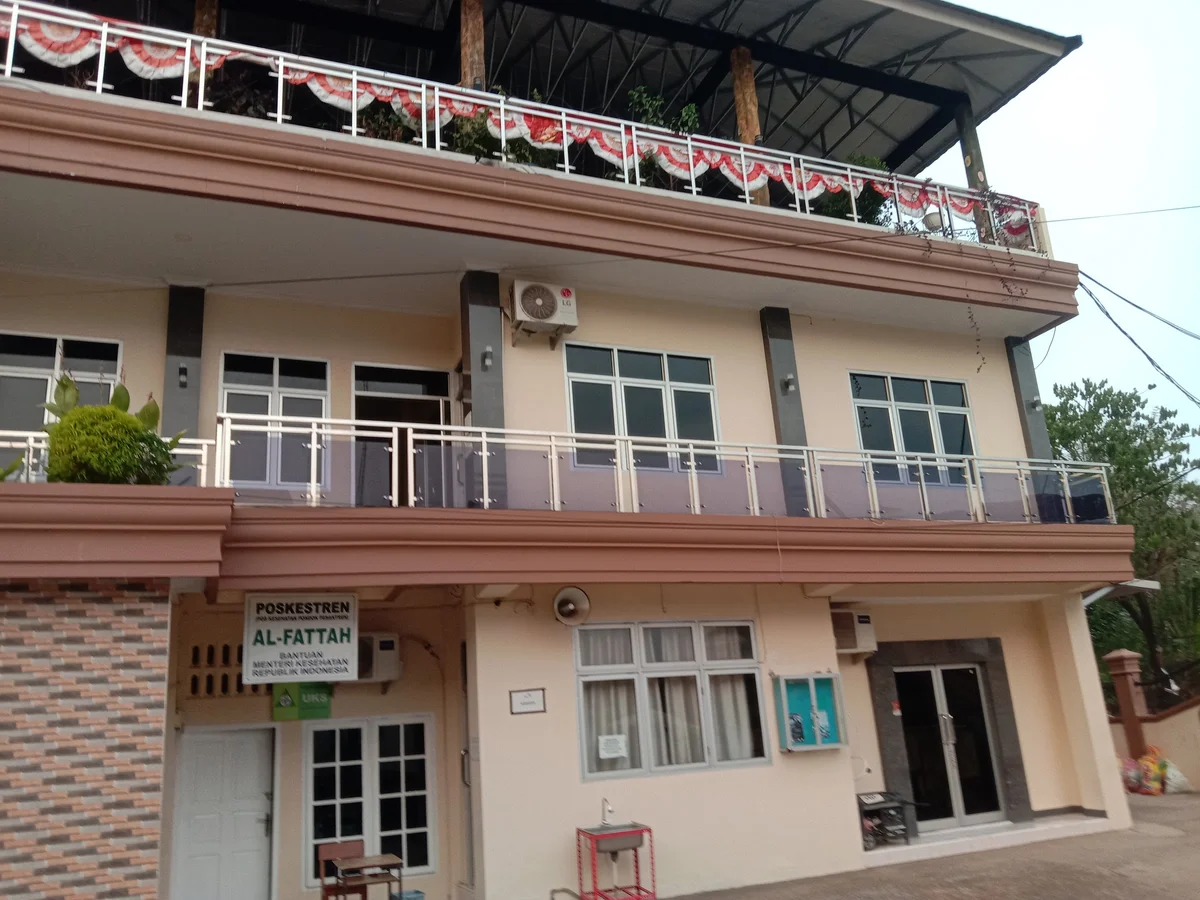
Palembang is not just a regular city, Palembang holds a lot of historical values. Dates back to ancient times, Palembang was founded as the state and capital of the Srivijaya Empire in the 7th century, Srivijaya was the largest Buddhist empire in ancient Indonesia whose territory covers most part of western Southeast Asia (both insular and mainland). For centuries, it was a sprawling centre of trade, government, and religion.
When Srivijaya fell in the 14th century, Palembang transformed as the Kingdom of Palembang and came under the control of the Java-based Majapahit Empire. The Majapahit would rule the Kingdom of Palembang until later it is transformed as the Sultanate of Palembang. The Sultanate lasted until 1825, when the Dutch seized the area. Under the Dutch colonization, canals were built and the Musi River was optimised for trade and transportation.
Palembang was the site of a battle between the Allies and Japan during World War II, and several conflicts during the National Revolution period of the late 1940s. Since independence, the city has undergone major development. In the 1960s, the iconic Ampera Bridge was built to allow development to the eastern side of the city.
In 2011, the city was the venue for the Southeast Asian Games, and for the 18th Asian Games in 2018 (jointly with Jakarta).