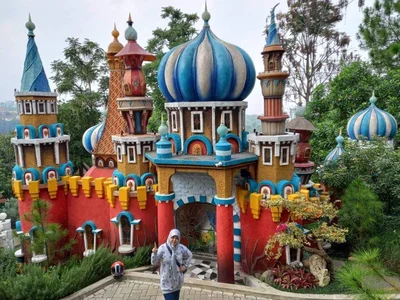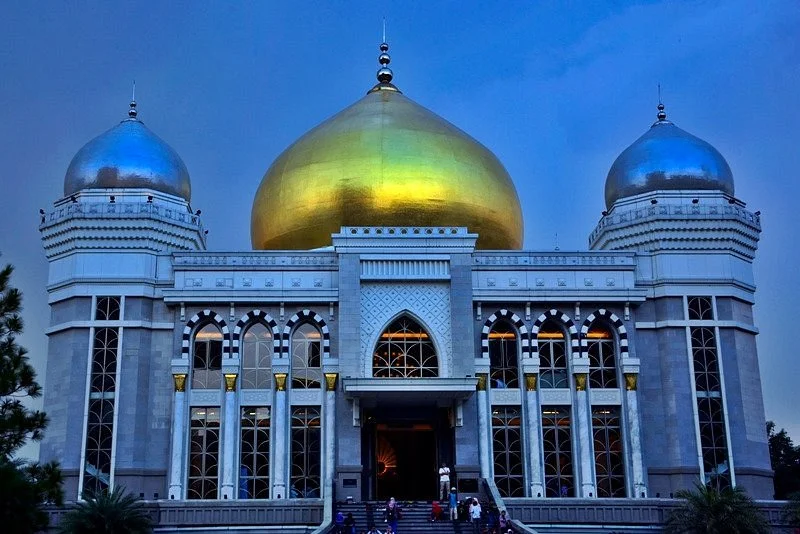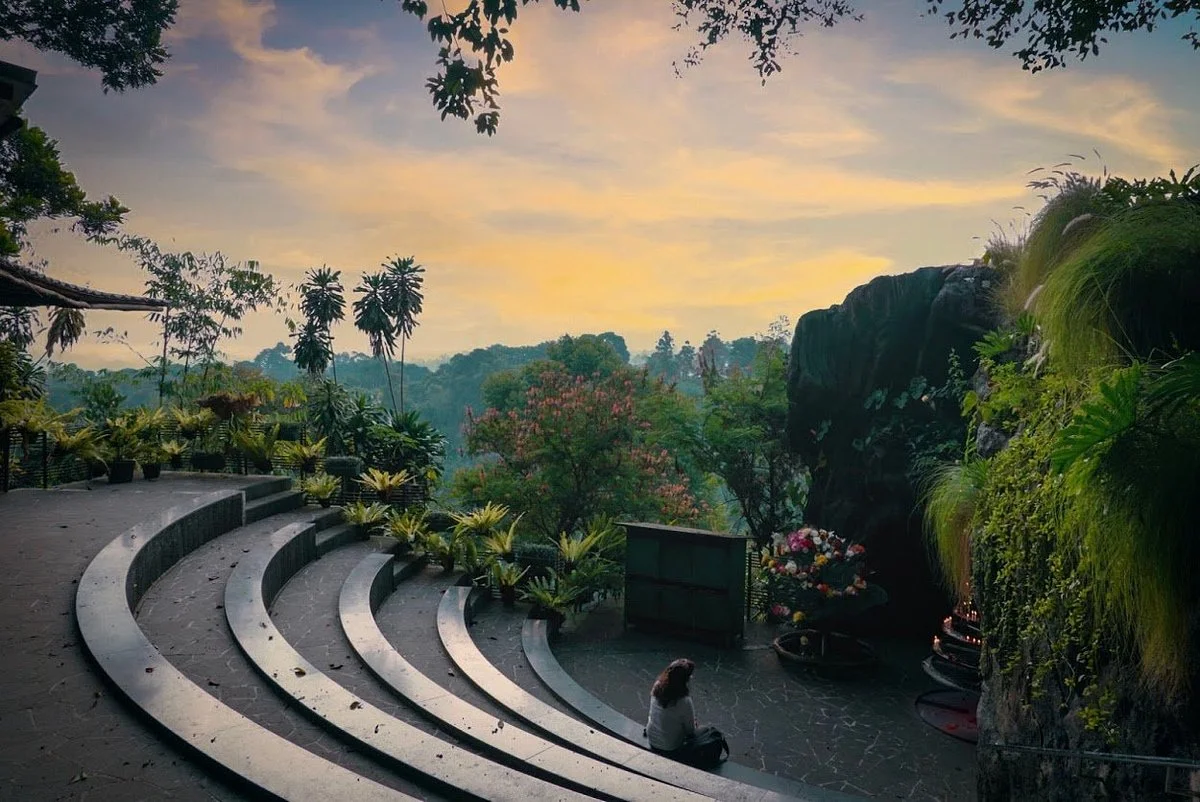
Bandung (Sundanese: ᮊᮧᮒ ᮘᮔ᮪ᮓᮥᮀ, romanized: Kota Bandung, pronounced [ˈbandʊŋ] ; , Van Ophuijsen Spelling: Bandoeng) is the capital city of the West Java province of Indonesia. Located on the island of Java, Greater Bandung (Bandung Basin Metropolitan Area / BBMA) is the country's second-largest and second most populous metropolitan area, with over 11 million inhabitants. Situated 768 meters (2,520 feet) above sea level (the highest point in the North area is at an altitude of 1,050 meters (3,445 feet), and the lowest in the South at 675 meters (2,215 feet) above sea level), approximately 140 kilometres (87 miles) southeast of Jakarta, Bandung has cooler year-round temperatures than most other Indonesian cities. The city lies in a river basin surrounded by volcanic mountains that provide a natural defence system, which was the primary reason for the Dutch East Indies government's plan to move the capital from Batavia (modern-day Jakarta) to Bandung.
The Dutch first established tea plantations around the mountains in the 18th century, and a road was constructed to connect the plantation area to the colonial capital Batavia (180 kilometres (112 miles) to the northwest). In the early 20th century, the Dutch inhabitants of Bandung demanded the establishment of a municipality (gemeente), which was granted in 1906, and Bandung gradually developed into a resort city for plantation owners. Luxurious hotels, restaurants, cafés, and European boutiques were opened, leading the city to be nicknamed Parijs van Java (Dutch: "The Paris of Java").
After Indonesia declared independence in 1945, the city experienced ongoing development and urbanization, transforming from an idyllic town into a dense 16,500 people/km2 (per square kilometre) metropolitan area with living space for over 8 million people. New skyscrapers, high-rise buildings, bridges, and gardens have been constructed. Natural resources have been heavily exploited, particularly by conversion of the protected upland area into highland villas and real estate. Although the city has encountered many problems (ranging from waste disposal and floods to a complicated traffic system resulting from a lack of road infrastructure), it still attracts large numbers of tourists, weekend sightseers, and migrants from other parts of Indonesia. In 2017 the city won a regional environmental sustainability award for having the cleanest air among major cities in ASEAN. The city is also known as a Smart City, leveraging technology to improve government services and social media that alert residents to issues such as floods or traffic jams. The city is part of the UNESCO Creative Cities Network, which it joined in 2015.
Bandung is Indonesia's major technology centre.The first Asian-African Conference, the Bandung Conference, was hosted in Bandung by President Sukarno in 1955 and now decennial event. Redevelopment of the existing Husein Sastranegara International Airport (BDO) was completed in 2016. The new larger second airport for Greater Bandung Kertajati International Airport (KJT) opened in June 2018, just in time for the 2018 Asian Games. To improve infrastructure, the construction of the Jakarta-Bandung high-speed rail started in 2018 and completed. This was to be complemented by an indigenous type of Automated People Mover (APM) and Light Rail Transit (LRT).
There are many activities that you can do in the city or outside the city. As Bandung highland is surrounded by a string of mountains, activities in the outskirts of the city are centred about the mountain resorts, adventure activities and outdoor sports. In the city, you can have savor the culinary diversity (see the Eat section), shop at the cheap outlets and distros (see the Buy section) or just hang around.
Every Sunday is Car-Free Day along Jalan Dago from Cikapayang to the north to Simpang-Siliwangi 06:00-10:00. Come as early as possible, because it can become hectic, as it is only a small street.
Every Sunday you can find a Sunday Market in Gasibu, which is located to the north of Gedung Sate. You can find a variety of food and handicrafts for an affordable price.
Bandung is a heaven for food lovers who enjoy new experiences. There is a huge variety of places to eat, ranging from thousands of travelling hawkers and warung food stalls to high-end restaurants. Prices vary equally, but are generally lower than in Jakarta. A good meal from a warung or simple restaurant is likely to cost less than Rp30,000, but in high-end restaurants and in luxurious hotels you can easily spend 10 times this.
Budget eateries, including street food, are abundant throughout the city. Most of the higher-end restaurants can be found in the city centre and towards the north of the city, mainly in the Dago area. In addition, there is a huge range of restaurants (from cheap fastfood to high-end international cuisine) in the shopping malls, with the Paris Van Java mall in Northwest Bandung and the Trans Studio Mall in South Bandung standing out.
Although vegetarian restaurants are not common, many Indonesian (and Sundanese) dishes are vegetarian. It is therefore relatively easy to find vegetarian food, such as lotek (spicy vegetable salad) and dishes with tahu (tofu) and tempe. Be aware, however, that many dishes are served with sambal (chili sauce) that may contain terasi (shrimp paste), or with krupuk udang (shrimp crackers).
Your culinary tour in Bandung does not end at the restaurants and cafés. There are plenty of bakeries in the city where exotic pastries entices you to bring one home — a legacy of the Dutch colonial time. Some of them have a high popularity, that you may have to be in a queue even before the shop opens!
Shopping for clothing and accessories is one of the main reasons that, every weekend, many people from Greater Jakarta visit Bandung. Many items are less expensive than in Jakarta. There are shopping malls scattered across the city. Many of them have a combination of Indonesian and international shops, cafés, and restaurants, and most of them also have a family karaoke venue (KTV) and a cinema. The largest and most modern shopping malls in Bandung are the Trans Studio Mall (South Bandung) and Paris Van Java (Northwest Bandung). A few malls are known for their cheap clothing, including the BTC Fashion Mall in Northwest Bandung, and the Pasar Baru Trade Centre in the city centre (which is a favourite for Malaysian tourists).
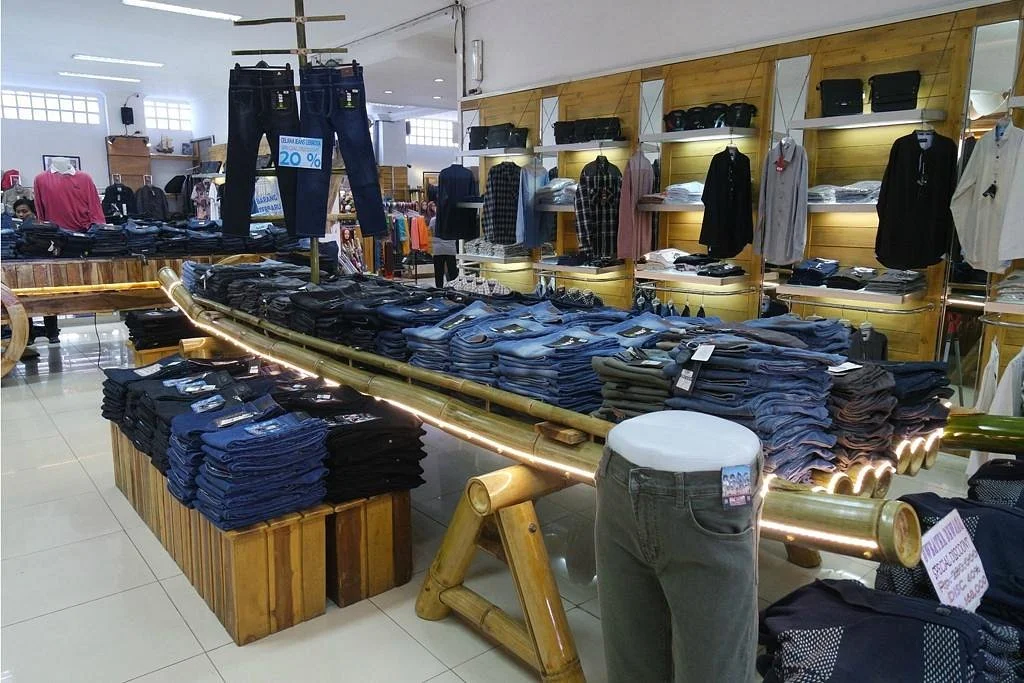
Denim (jeans) stores can be found along Jalan Cihampelas in Northwest Bandung. These became very popular in the 1990s with unique facades built to attract people. Some of the stores also sell factory outlet garments, but the quality is rather inferior to factory outlets in Jl Setiabudhi, Jl Dago and Jl Riau. The new skywalk over the north part of Jl Cihampelas offers good views of the surrounding area. It has an elevator and small booths that sell food and accessories.
On the other side of the city, in Cibaduyut (South Bandung), leather shoes and other leather products are produced and sold in numerous stores. It is paradise for those who like long boots, which can be made to order at relatively cheap prices. They take between three and seven days to be ready.
Bandung has a vast range of accommodation, being an important destination for domestic business travellers, a citytrip destination mainly for Indonesians, Singaporeans, and Malaysians, and foremost the main place for people from Greater Jakarta to go for a weekend break. Occupancy rates are therefore high during weekends, and especially long weekends and holidays, and so are accommodation prices. Broadly speaking, most accommodations are in the central and northern parts of the city. All major domestic (favehotel, Santika, Aston) and many international (ibis, Novotel, Holiday In, Hilton, Sheraton) hotel chains are present with one or more hotels in the city.
Central Bandung is home to the city's grand old hotels, the Savoy Homann and the Grand Preanger, but also a very wide range of business hotels of various price and quality levels. Business hotels can also be found in abundance around the Pasteur toll gate in Northwest Bandung. Many tourist-oriented hotels, including some luxurious hotels such as the Sheraton, can be found in the Dago area, including the northern hillsides. In the Ciumbeleuit and Setiabudhi areas of Northwest Bandung there is also a growing number of hotels, including the large and luxurious Padma Hotel with spectacular hill views. More to the north, the mountain town of Lembang also has many accommodation options, including private villas.
The extensive residential areas of East and South Bandung have fewer accommodation options, although there are still various budget hotels. A notable exception is the Trans Studio complex in South Bandung, which in addition to the large indoor theme park and high-end shopping mall also include Asia's largest Ibis hotel, and a very luxurious hotel that brands itself as 'the first hotel with 6 stars in the country'.
Bandung is in the central highlands of Parahyangan. It can be reached from Jakarta via the toll road or by train. Many buses and minivans connect Jakarta and Bandung. An alternative to the toll road is the winding road via the Puncak mountain pass. The route through Puncak is quite scenic but on weekends and public holidays the traffic is congested.
Travelling around in Bandung can be quite complex and frustrating, especially to newcomers, because there is no mass rapid transit system. Locals travel using small public minibuses, known as angkot from angkutan = transport and kota = city.
=
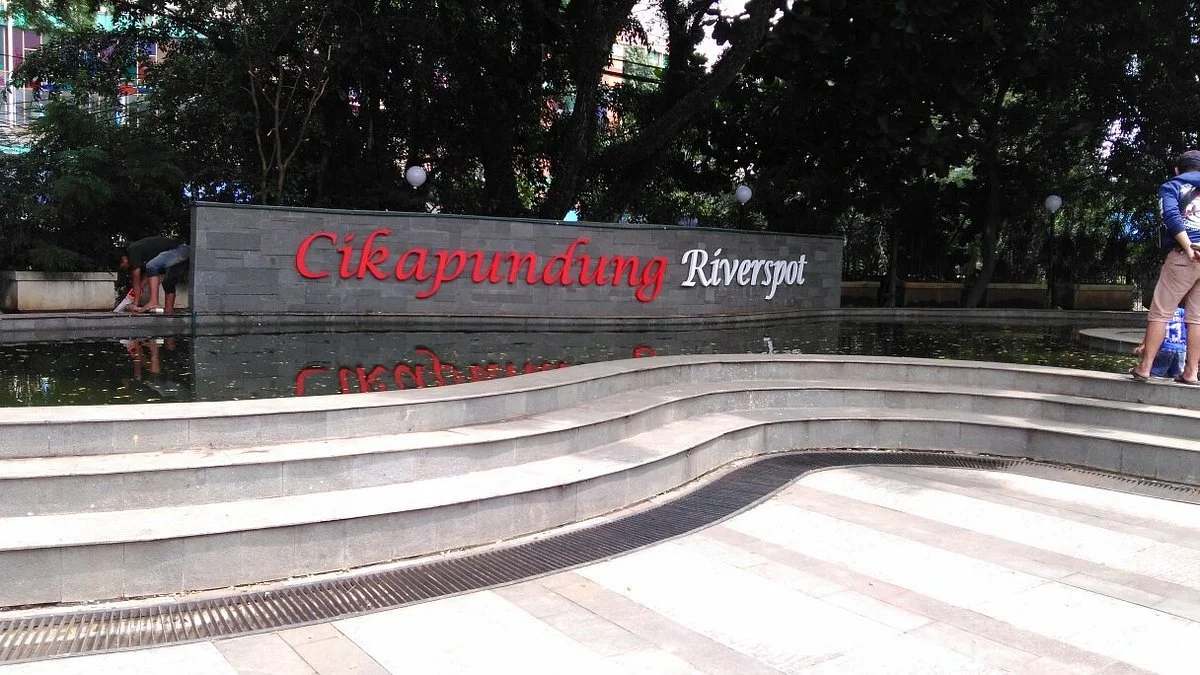
On the banks of Cikapundung River and the shores of Bandung's Great Lake, there were numerous archeological early human remains found, including of "Java Man", estimated to be about a million years old.
The first written reference to the city of Bandung is from 1488, when it was established as part of the Sunda Kingdom.
In the 17th to 18th centuries, the Dutch East Indies Company (VOC) created small plantations in Bandung, with a road to Batavia (today's Jakarta) completed in 1786. In 1809, Louis Bonaparte, the ruler of the Netherlands and its colonies, ordered the Dutch Indies Governor H.W. Daendels to improve Java's defenses against the threat of the English, who occupied the nearby Malay peninsula. Daendels responded by building the Great Post Road (De Groote Postweg) that stretched about 1000 km between the west and the east coasts of Java. The road was diverted through Bandung along what is now Jalan Asia-Afrika because of the North Coast's impassable swamps and marshes at the time.
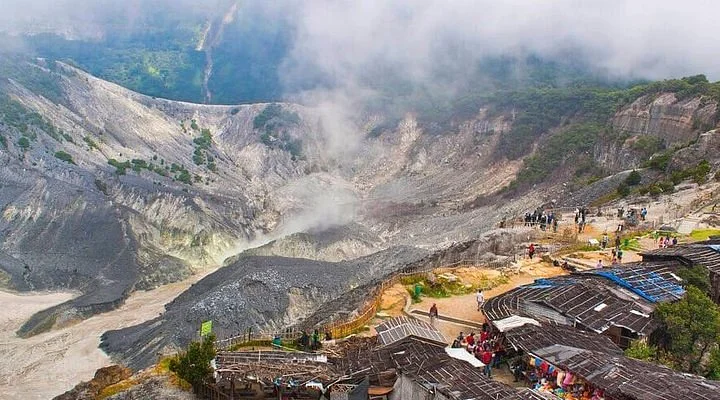
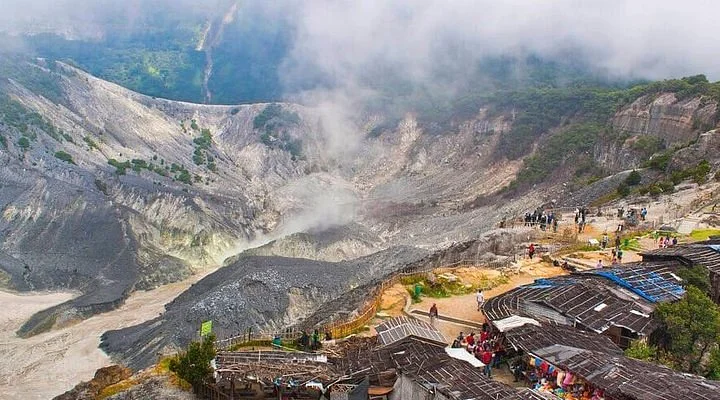
Daendels liked Bandung's strategic location so much that he ordered the capital to be moved there. Military barracks were built and Bupati Wiranatakusumah II, the chief administrator of that area, built his dalem (palace), Masjid Agung (The Grand Mosque) and pendopo (meeting place) in the classical Javan alun-alun (city square) near a pair of holy city wells (Sumur Bandung) and facing the mystical mountain of Tangkuban Perahu (near Lembang).
Powered by its cinchona (for malaria drug quinine), tea, and coffee plantations, Bandung prospered and developed into an exclusive European style resort with hotels, cafes, and shops. Many of Bandung landmarks, including the Preanger and Savoy Homann hotels, as well as the shopping street of Jalan Braga, are still available today. The Concordia Society building, now Gedung Merdeka, was built with a large ball room as a club for rich Europeans to spend their weekends.
In 1880, the first major railroad between Jakarta to Bandung opened, boosting small industries and bringing in Chinese workers. The first of Bandung universities, the Technische Hogeschool (TH) was established on July 3, 1920. One of its alumni members is President Soekarno himself. That university is now known as the Institut Teknologi Bandung (ITB)
In 1942, after Japanese soldiers landed in coastal areas of Java, the Dutch retreated from Jakarta to Bandung, but were driven out from there as well and surrendered soon after. After the end of the war, first the British and later the Dutch came back trying to reestablish the pre-war colonial situation, but in 1946, during the struggle for Indonesian independence, the city of Bandung was burned down by retreating forces of the TRI, because they would not comply with the order given by the British forces to move out of Bandung to the south (Bandung Sea of Fire/Bandung Lautan Api). For the TRI this act was a sign of refusal to surrender. Over 200,000 people fled the city during the incident.
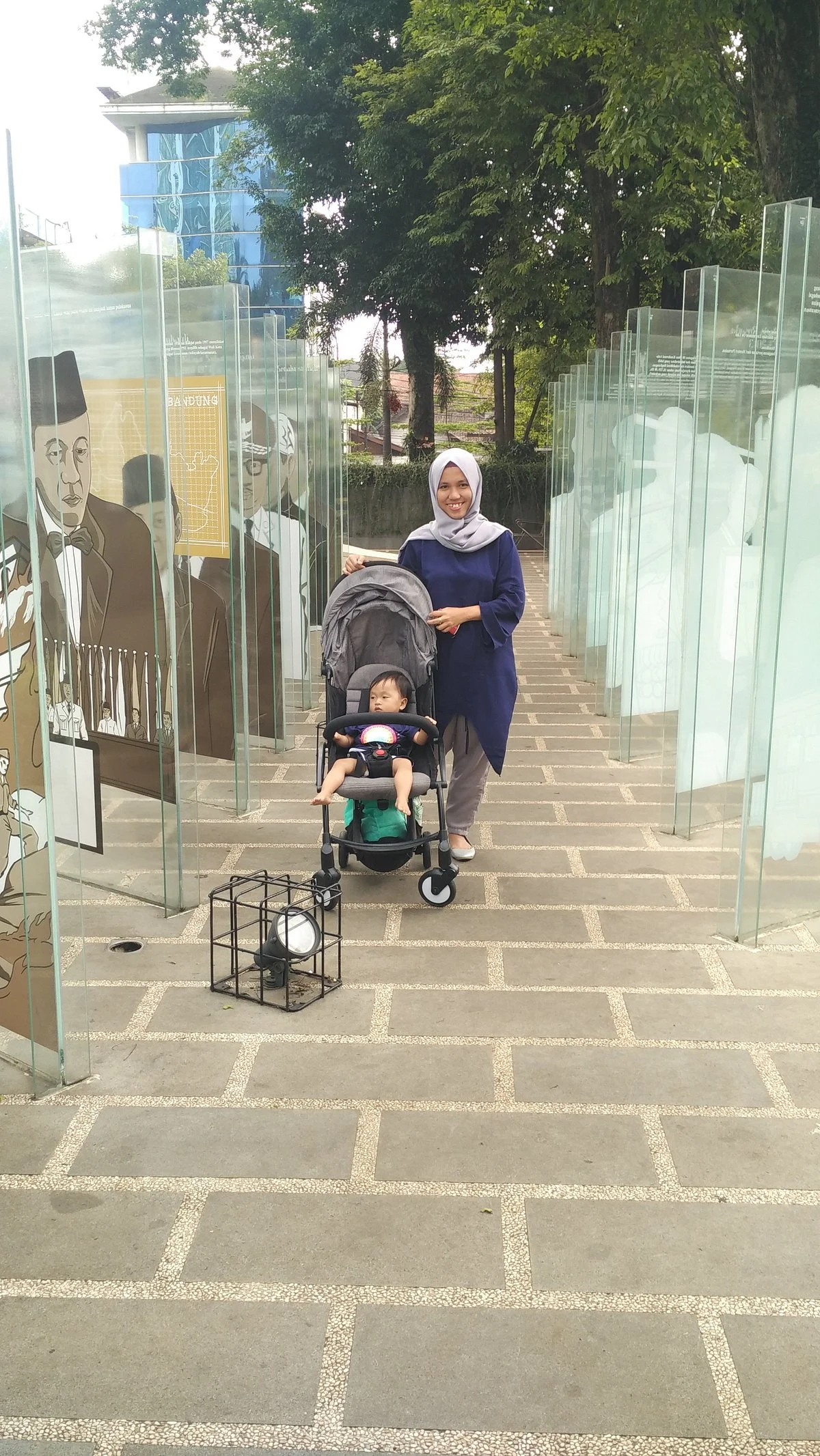
In 1955, the Asia Africa Conference (Konferensi Asia Afrika) was held in Bandung, paving the way for the creation of the Non-Aligned Movement in 1961. The Indonesian parliament was located in Bandung from 1955 to 1966, but was moved back to Jakarta in 1966.