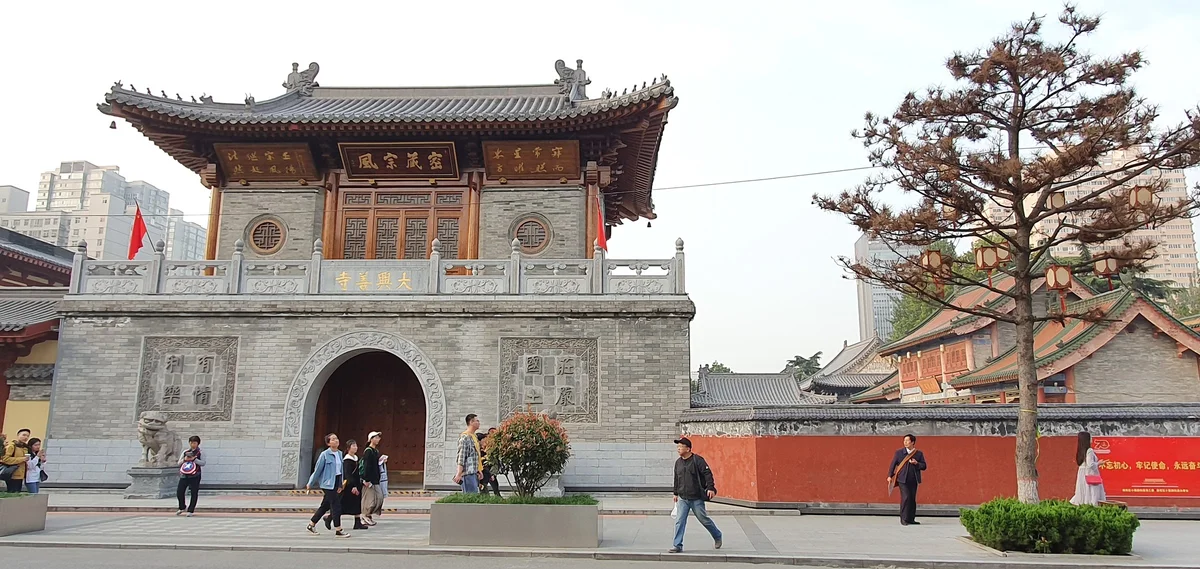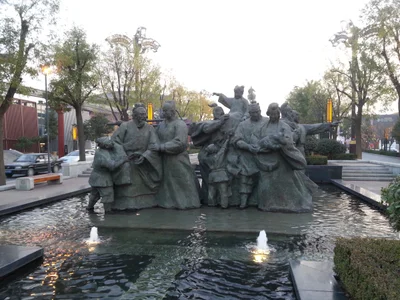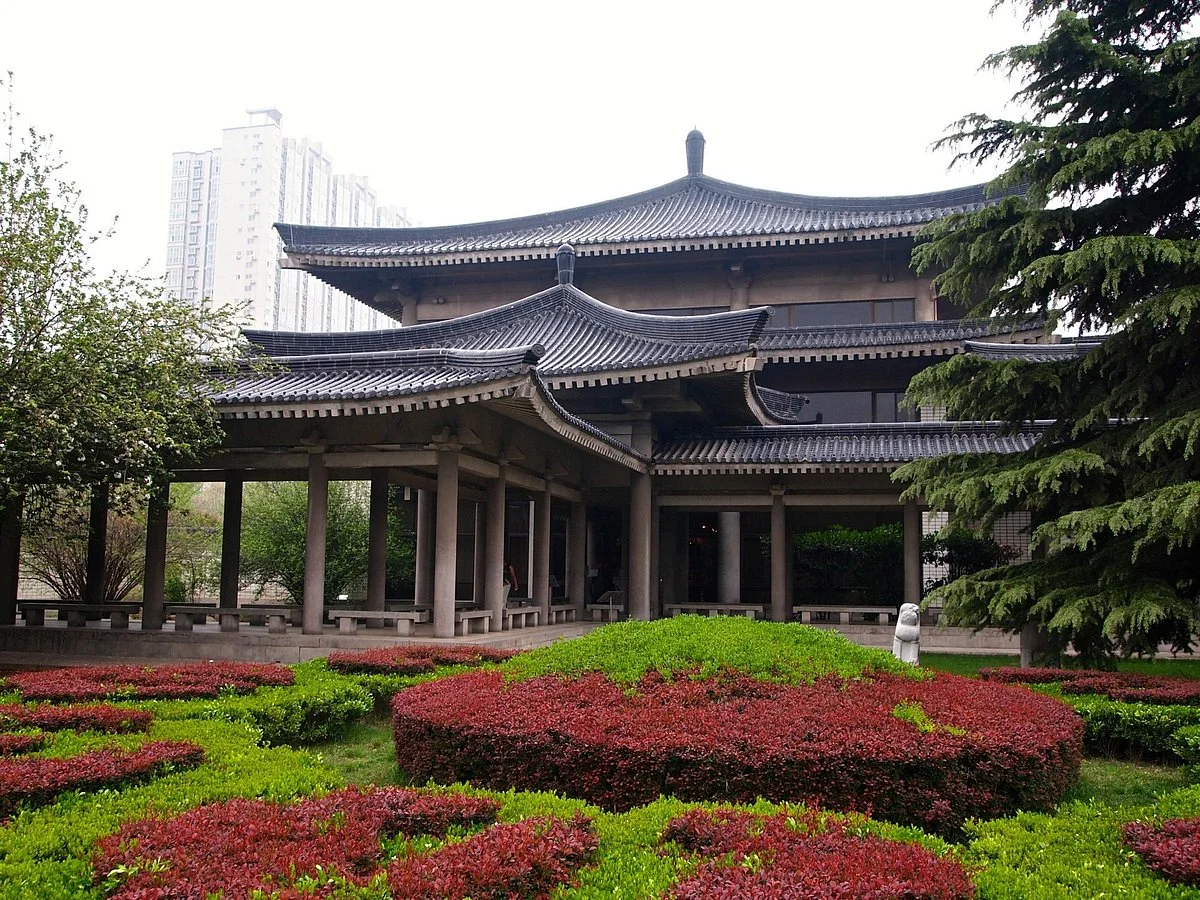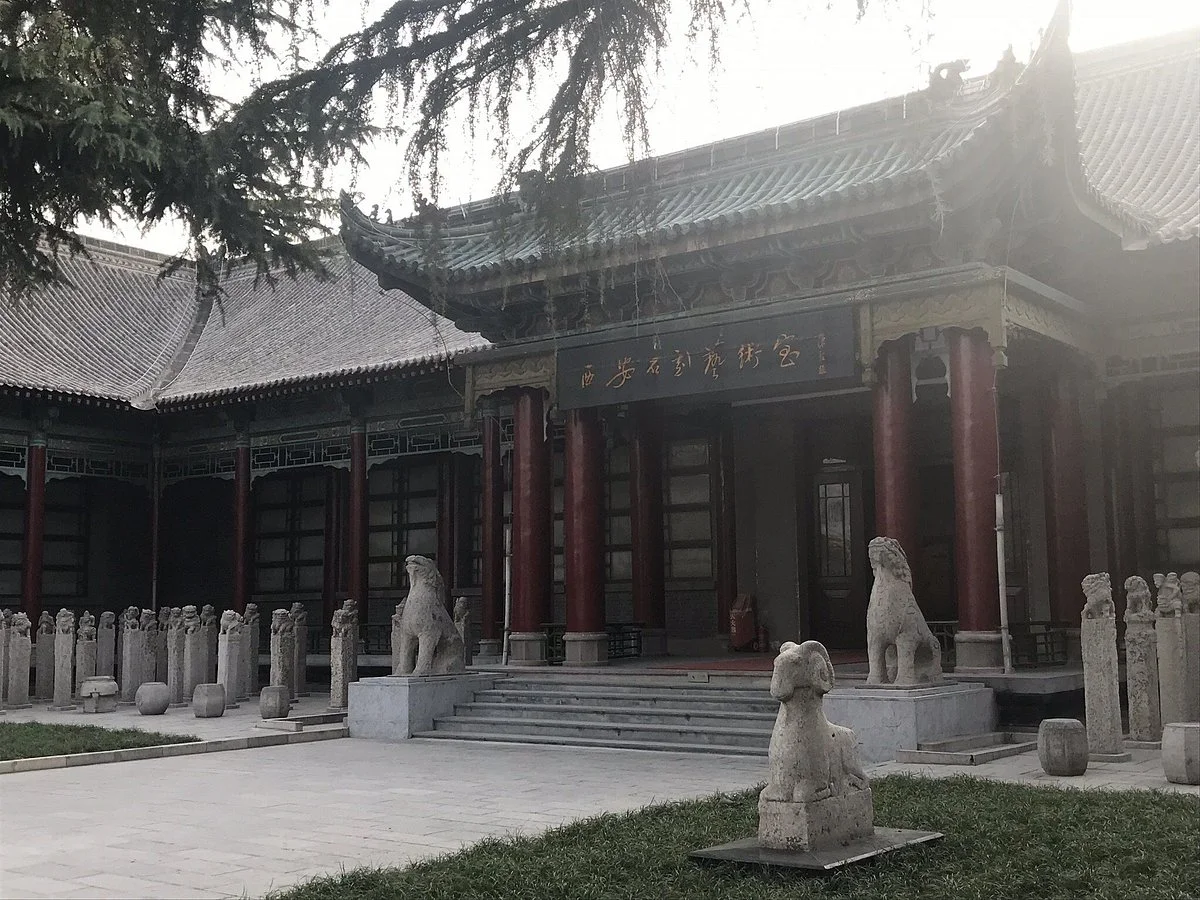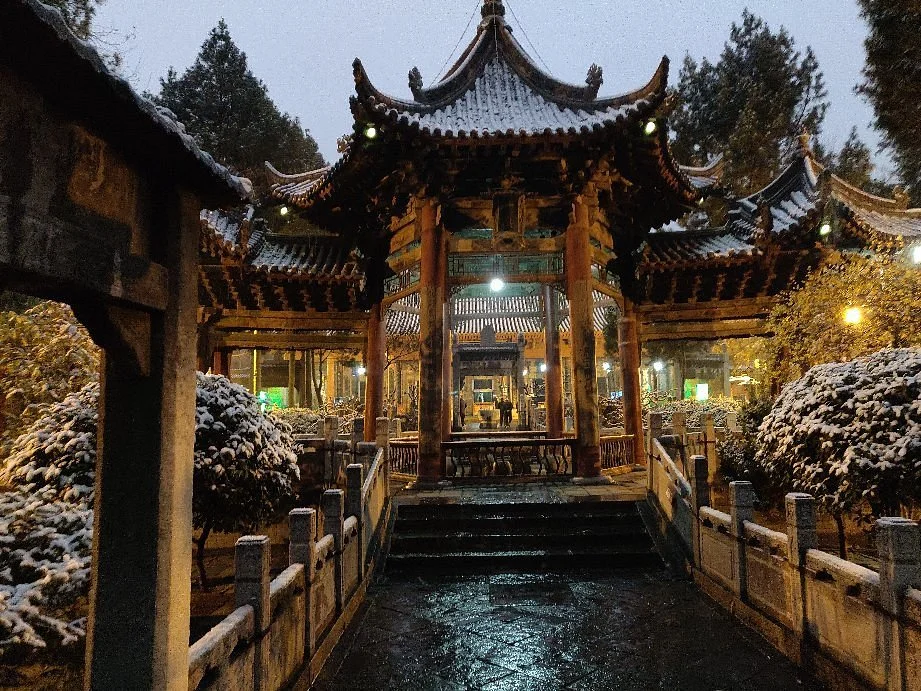
Xi'an is the capital of Shaanxi Province. A sub-provincial city on the Guanzhong Plain, the city is the third most populous city in Western China, after Chongqing and Chengdu, as well as the most populous city in Northwest China. Its total population was 12,952,907 as of the 2020 census.
The total urban population was 9.28 million.Since the 1980s, as part of the economic growth of inland China especially for the central and northwest regions, Xi'an has matured into a cultural, industrial, political and educational, and R&D hub. Xi'an currently holds subprovincial status, administering 11 districts and 2 counties. In 2020, Xi'an was ranked as a Beta- (global second tier) city by the Globalization and World Cities Research Network, and, according to the country's own ranking, ranked 17th.
Xi'an is also one of the world's top 100 financial centers, according to the Global Financial Centres Index. Xi'an is ranked in the top 20 cities in the world by scientific research output as tracked by the Nature Index, and home to multiple prestigious educational institutions in Northwest China, such as Xi'an Jiaotong University, Northwestern Polytechnical University, Xidian University and Northwest University.Known as Chang'an (Chʻang-an) in much of its history, Xi'an is one of the Chinese Four Great Ancient Capitals, having held the position under several of the most important dynasties in Chinese history, including Western Zhou, Western Han, Sui, Northern Zhou and Tang.
Xi'an is now the second most popular tourist destination in China.
The city is the starting point of the Silk Road and home to the Terracotta Army of Emperor Qin Shi Huang, both of which are listed as UNESCO World Heritage sites.
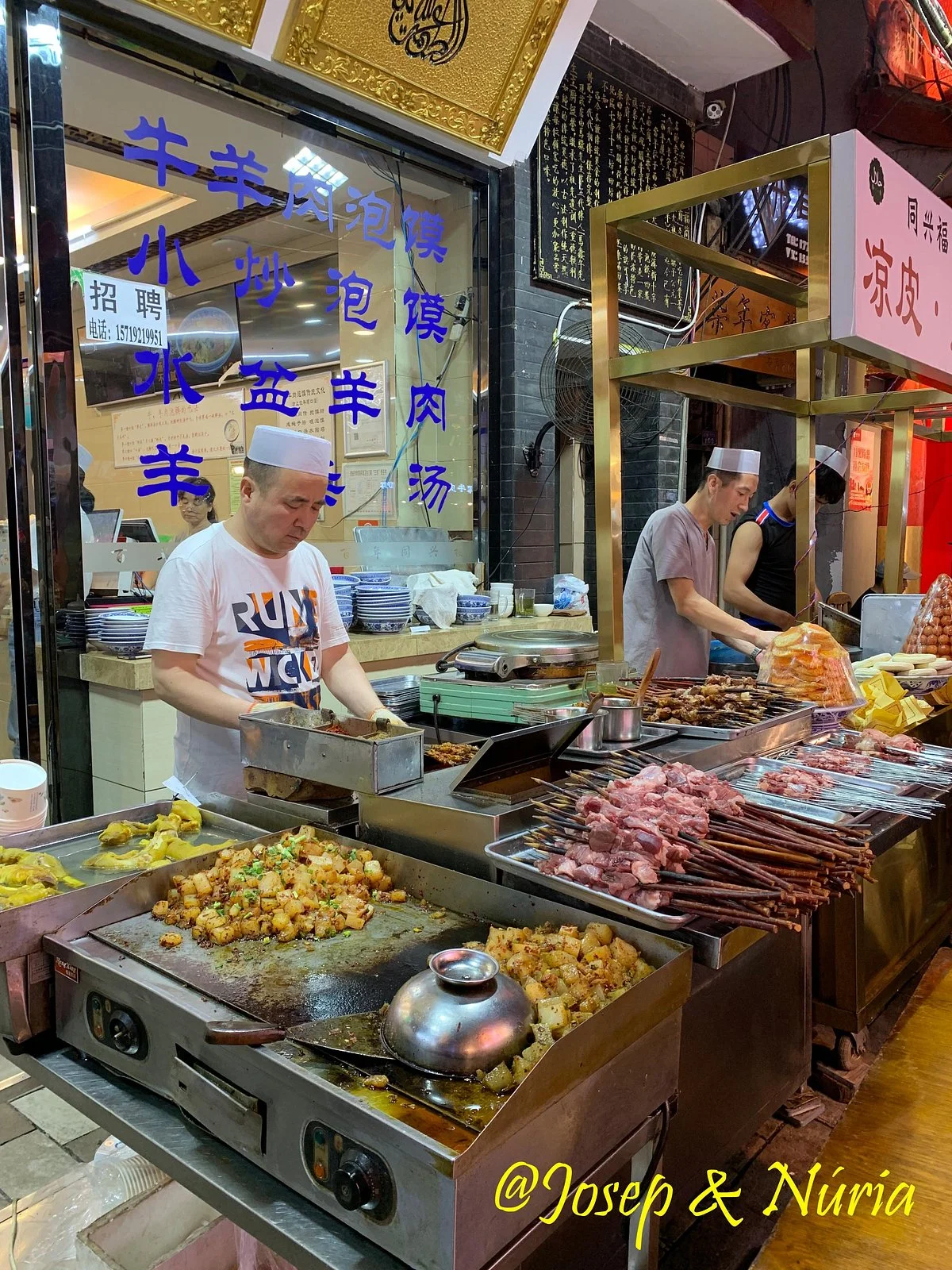
The Xi'an as is today is very different from like 10 or 20 years ago, when there were only certain restaurants known by the locals to serve delicious food. Now the restaurants are everywhere, especially ones like KFC and McDonald. Unfortunately the younger generations don't seem to appreciate the traditional cuisines and rather choose to eat fast food. Therefore, some of good old restaurants are forced to close down, being taken over by the newer ones.
Xi'an specialties include:
Some good places to look for restaurants are:
Night clubs in Xi'an are not abundant. All clubs play the same music, a mix of Chinese disco and some pop music. Most people go out between 22:00 and 01:00, but clubs are generally open until 04:00.
Be mentally prepared to be aggressively approached by club operators desperate for patrons.
In summer time, the area around South Gate (南门) is beautiful. East of it are three nice bars with terraces and gardens.
Along the short Nandajie (南大街) are the most clubs (you can also eat on the street as there are restaurants open past midnight).
Other options include:
As with most Chinese cities, several cheap run down hotels can be found near the train station. There are a few decent ones inside the city walls, on a road called Jie Fang Lu, going directly south from the train station. Bargaining is possible, especially if you are staying for more than one night. Expect to pay under ¥100 for a single room as getting a room for as low as ¥30 is possible.
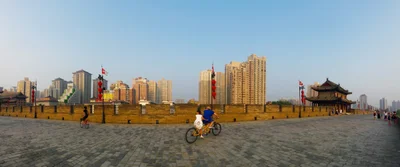
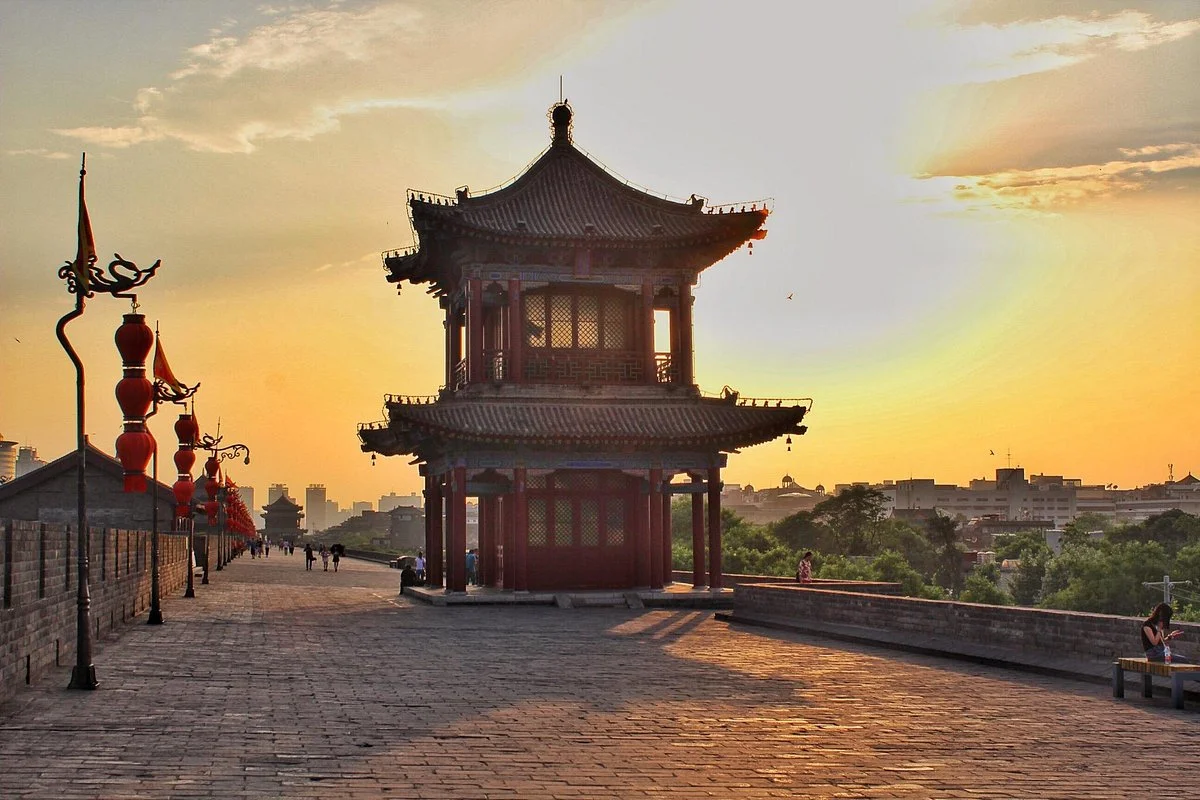
The old city is surrounded by a rectangular city wall. The Bell Tower (钟楼 Zhōnglóu) is in the dead center of the rectangle, and is considered the center of Xi'an. From here, the four main streets radiate along the four points of the compass.
Do not get confused by different names in tourist guides, addresses and bus stops: Nandajie, Nanda Street, South Street, and South Avenue are all the same street.
Locals often speak about Within the city walls (城里 chénglǐ, CHUNG-lee) and Outside the city walls (城外 chéngwài, CHUNG-why) when talking about locations. Outside the walls, the southern part is the most interesting - it offers shopping streets, bars and some nightlife.
Basically the inner Xi'an, the part inside the City Walls, is the old Xi'an, which is equivalent to the term "downtown" used to describe certain parts of a North American city. The buildings are mostly pretty short due to government policies. People who live inside the City Walls largely preserve a traditional way of life. For example, they are used to going to farmers' market for grocery, and also the provincial dialect is more prominent there. There is much more folklore to be found inside the City Walls than elsewhere in the city. Interestingly, there is a Roman Catholic church in the inner city, which was founded more than 300 years ago by the missionaries from the west.
There has been several urbanization projects happening since the 2000s in the southern part of Xi'an, outside of the City Walls, notably Xi'an Hi-tech Industrial Development Zone. That's where you can find the new, and urban aspects of Xi'an. Large-scale shopping malls around that area are very popular among the new generations. Each shopping mall usually is a combination of restaurants, shopping areas, groceries, and entertainments. Also a considerable population from other parts of the city have relocated to this area for their children's education, since there are few prestigious schools in the area.
As usual in China, subways are the easiest way to get around if they serve your destination. There are also plenty of buses traveling everywhere at short intervals (main lines run every 5–10 minutes). If you are not confident enough with orientation, or if you do not like packed buses, the cheap taxis (出租车 chūzūchē, literally translated as "rented car", which is pronounced as CHOO-TSOO-CHUH) are the best alternative, broadly available, except for during rush hours.