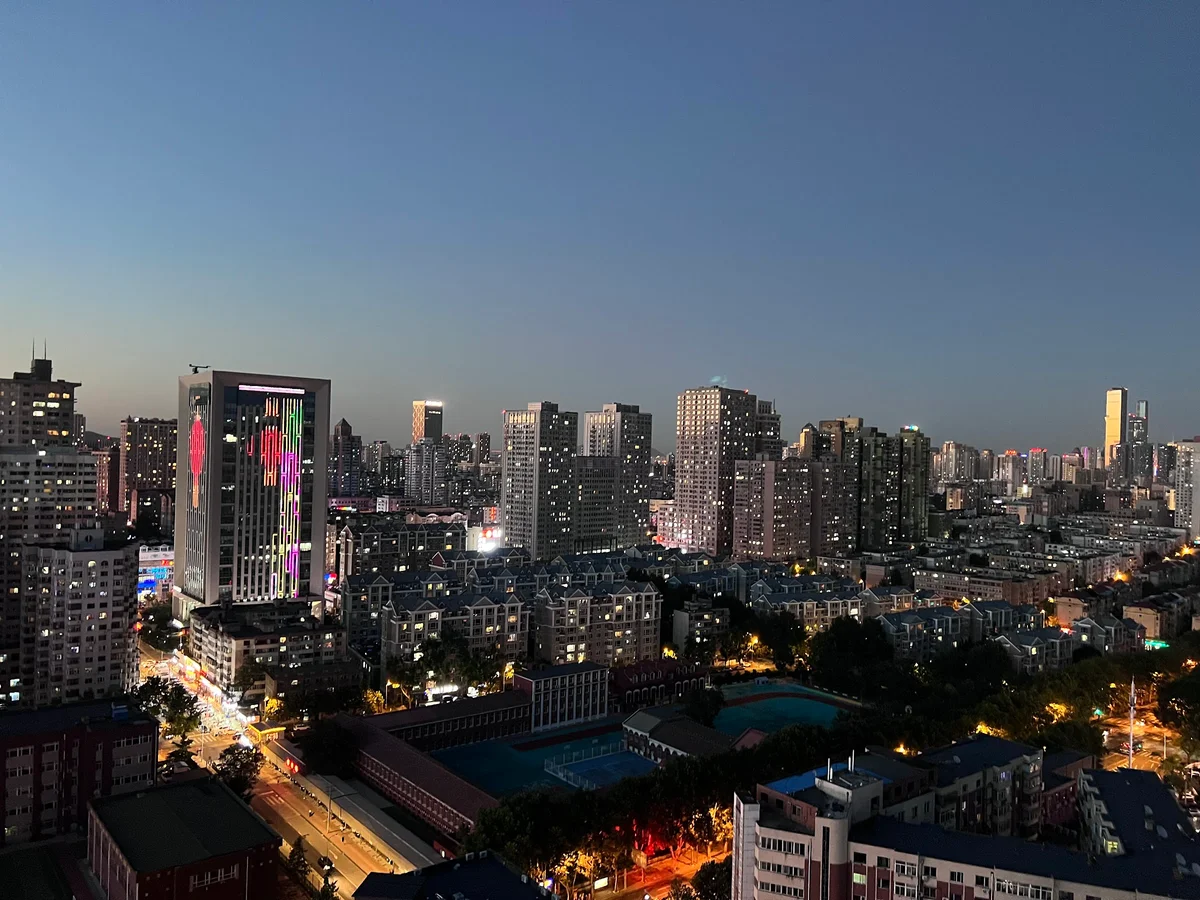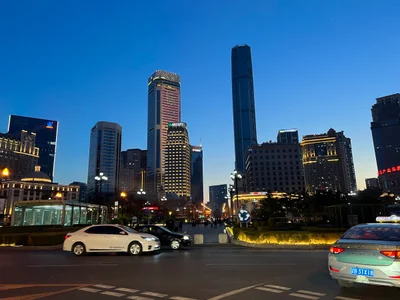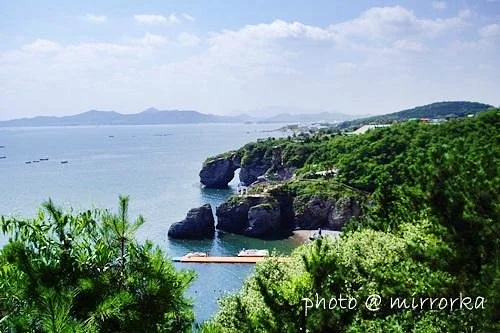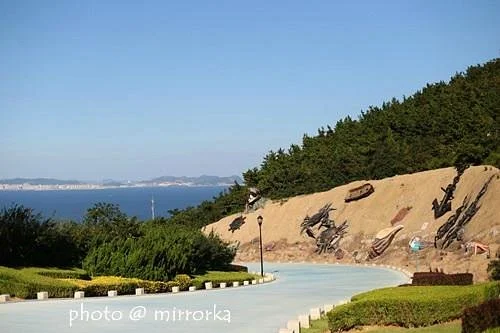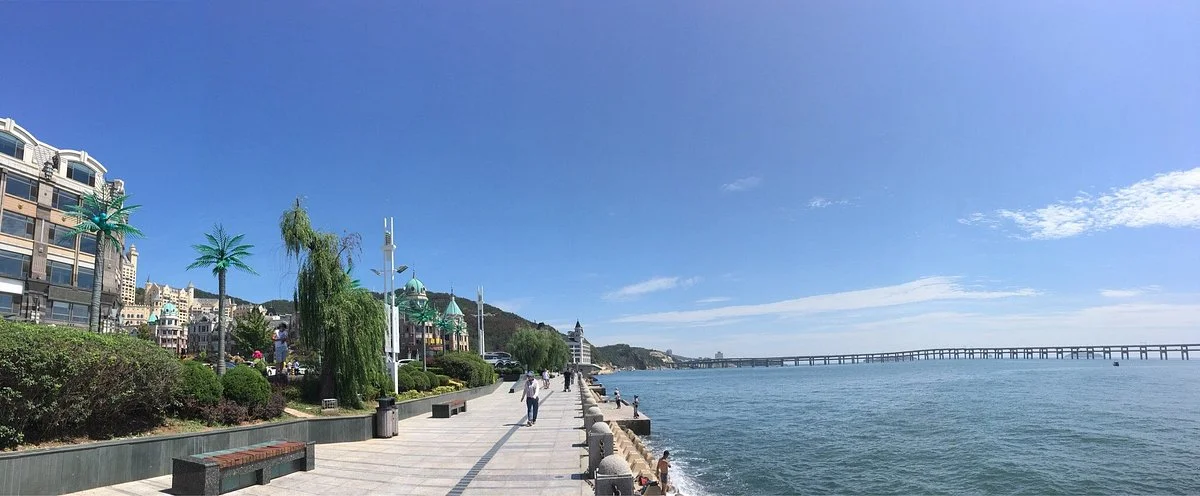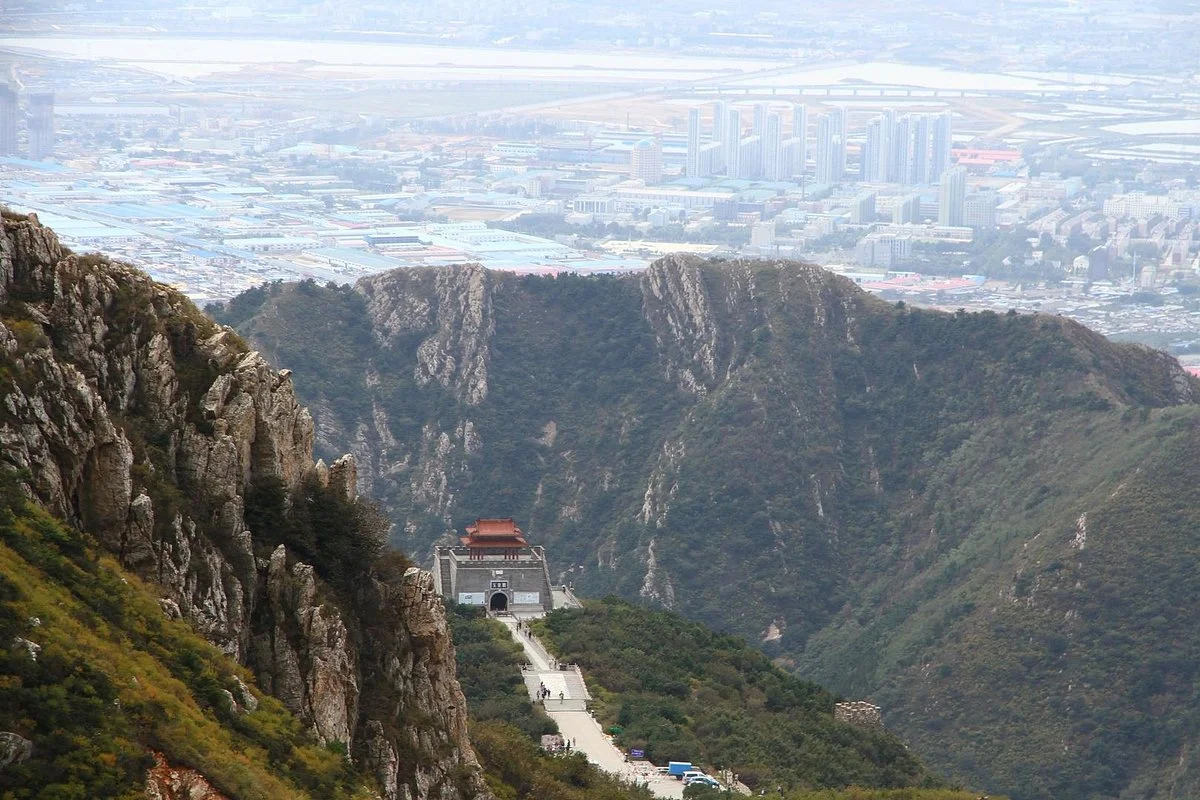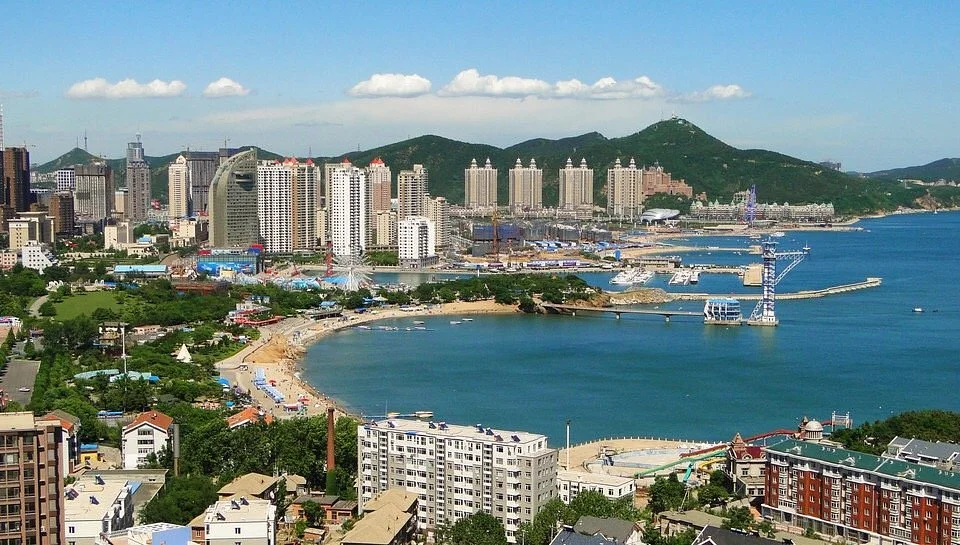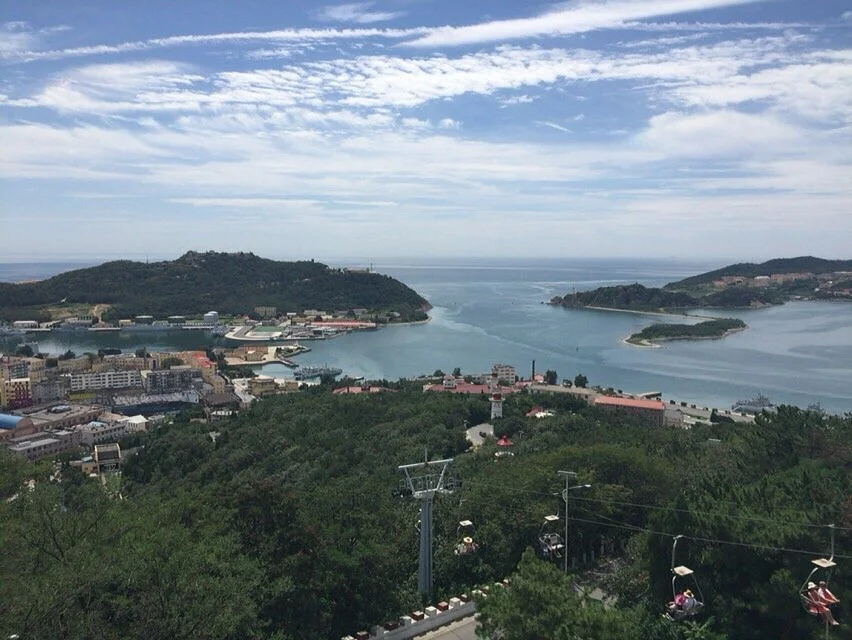
Dalian is a major sub-provincial port city in Liaoning province, People's Republic of China, and is Liaoning's second largest city (after the provincial capital Shenyang) and the third-most populous city of Northeast China (after Shenyang and Harbin). Located on the southern tip of the Liaodong peninsula, it is the southernmost city in both Liaoning and the entire Northeast. Dalian borders the prefectural cities of Yingkou and Anshan to the north and Dandong to the northeast, and also shares maritime boundaries with Qinhuangdao and Huludao across the Liaodong Bay to west and northwest, Yantai and Weihai on the Shandong peninsula across the Bohai Strait to the south, and North Korea across the Korea Bay to the east.
As of the 2020 census, its total population was 7,450,785 inhabitants whom 5,106,719 lived in the built-up (or metro) area made of 6 out of 7 urban districts, Pulandian District not being conurbated yet.
Today, Dalian is a financial, shipping, and logistics center for East Asia. The city has a significant history of use by foreign powers for its ports. Dalian was previously known as "Dalniy" (Russian: Дальний; Dal'nii), "Dairen" (Japanese: 大連), and "Lüda" or "Luta" (Chinese: 旅大; pinyin: Lǚdà). The city used to be better known as "Port Arthur" and "Ryojun" (Japanese: 旅順) from the original Port Arthur, now the city's Lüshunkou district.
In 2016, Dalian ranked 48th in the Global Financial Centres Index. In 2012, Dalian ranked 82nd in the Global City Competitiveness Index. In 2006, Dalian was named China's most livable city by China Daily. It is now a "Beta - Global City" according to the Globalization and World Cities Research Network. The large amount of port traffic makes Dalian a Large-Port Metropolis.Dalian is one of the top 40 science cities in the world by scientific research as tracked by the Nature Index, ranking 49th globally in 2023. The city is home to several major universities, notably Dalian University of Technology and Dalian Maritime University, members of China's prestigious universities in the Project 211, and the Dalian Institute of Chemical Physics of the Chinese Academy of Sciences.
There are a number of attractions around the city that, though they are within the Dalian administrative area, are far enough away from the centre to warrant devoting a full day to.
The local cuisine of Dalian is influenced by Dongbei regional style of cooking (which has a not wholly unjustified reputation for being big on portions and relatively low on flavour) and the city's proximity to the sea. Buns, pancakes and dumplings are staples rather than rice or noodles. The city also has a very good reputation for seafood dishes which are well worth trying. Overseas travellers should be aware, however, that in China seafood has different connotations than elsewhere, literally seafood refers to anything edible from the sea. Fish dishes invariably contain plenty of small bones that must be navigated around or crunched through (the local method). Additionally, due to its relation and storied history with Korean and Japanese empires, Dalian has many restaurants serving this kind of fare.
The range and number of restaurants is huge, and the listings provided should be considered as merely scratching the surface of what is available. Individual exploration of the restaurants is recommended. Reservations are generally not necessary, so phone numbers have only been provided for those restaurants where tables may need reserving. Those wanting to stick to the familiar will find a large number of western and Japanese and Korean restaurants available, and international fast food chains are well represented.
For good eats, try the recommendations in Zhongshan District and in Xigang District.
Travelers on a budget will be spoiled for choice in Dalian, with low cost restaurants on literally every street corner (particularly in the more residential areas outside of the main city center). It would be impossible to begin to list them all, so only a couple of options available near the center have been listed in the district articles. The quality of the restaurants can be highly variable. A good rule of thumb when searching for a decent place to eat is, if the decor looks shabby but the place is packed the food is almost always good. Ordering can be tricky for non-Chinese speakers as English menus are incredibly rare in cheaper restaurants, and English speaking staff are even more rare. Try the roadside snack stalls which offer pancakes, rolls, skewers of barbecued meat and candied fruits starting at ¥1. These may cause some upset stomachs or bouts of diarrhea.
As with budget restaurants there are plenty of mid-range restaurants to choose from in Dalian (differentiated from budget restaurants usually by being larger and having better decor), so experimentation is the key. The restaurants listed in the various district articles are just a couple of particularly noteworthy examples. The same caveats as for budget restaurants apply as regards language, though quality is less variable.
The more expensive end of the restaurant market in Dalian is generally a seafood restaurant boasting fresh, usually local cuisine or the more authentic Japanese restaurants (as opposed to those which have been adapted for local taste preferences). English menus and English speaking staff are most common in the western-themed restaurants, but even mid-priced restaurants may have English or pictures available.
There are a number of restaurants which serve seafood. Typically those downtown or in Xinghai Square have the best seafood, notably Wanbao and Zihan Fan Dian.
Wechat payment and Alipay are available in almost every restaurant.
You don't need to tip the waiters, as they don't ask for tips or the tip has been included in the bill as a "service fee". Larger restaurants sometimes put a service fee up to 20% in the bill.
Dalian offers a wide variety of bars and nightclubs catering to a mixture of locals, foreign business people and the teaching crowd. The city lacks a bona fide bar street such as Beijing's Sanlitun or Shanghai's Maoming Lu with bars fairly liberally scattered across the city centre as well as near large universities. There are three main clusters of bars that those wishing to bar hop could concentrate on, however, the first and most centralized along a side street off Wuwu Lu near Sanba Square, the second along Changjiang Lu north of the Shangri-la Hotel and the third along Gaoerji Lu south of People's Square. KTV, or karaoke, is a large part of Chinese culture. There are a variety of such, some catering more to family or group get togethers and some for business outings. Typically the former are based in larger buildings and have little shops inside where drinks and snacks can be purchased, while the latter tend have a row of standing waitresses or mistresses lined up at the front door or shortly upon entering the singing room.
Another good place to go for drinks for those on the cheap are the night markets that spring up during the summer. These offer very cheap draught beer (¥1-3 for a large glass) and barbecued meat, tofu, vegetables and bread in an informal outdoor setting; some may not even have chairs. This isn't recommended for those who are staying in Dalian a short time or those whom haven't spent a few weeks in China getting their immune system ready unless you're not worried about having any diarrhea issues. Many of the locals don't even eat at these types of places. Those looking for non-alcoholic drinks, there are plenty of coffee shops and tea houses around the city.
Chain coffee shops include Starbucks, SPR and Amici Coffee, all of which offer Wi-Fi (SPR and Amici a food menu as well). Details are in district articles.
Cash is king. Chinese yuan (or renminbi) can be exchanged for at the airport, most 3-star and up hotels, and pretty much any bank. There may be restrictions to foreigners exchanging currency at some banks without the ID of a Chinese national, or limited amounts may only be permitted. Informal exchange personnel often spend time in the lobbies of large banks, with a black purse under arm, and typically offer a better exchange rate than the bank itself. Keep in mind these are not members working for the bank, and while there is a security guards in all lobbies of banks, so if you ever feel you're not getting a square deal, you may begin to bargain with others or attempt to exchange directly with the bank itself. While Unionpay is accepted at several establishments, those hailing from outside of China won't find the brand too helpful. Major credit cards are accepted few places other than 4- and 5-star hotels.
There are many souvenir stalls around the main tourist sights in Dalian. The typical local souvenirs are Russian-themed items (remnants of a bygone era when Moscow laid claim to Dalian and much of Northeast China) and dried seafood, neither of which are of particular interest to foreign travellers (the first would be a strange thing to bring back from China and the second would violate customs regulations). There are plenty of other shopping areas that would be of more interest. Some general Chinese souvenirs include jade sculptures, shadow boxes with shell mosaics, calligraphy scrolls, Peking Opera masks, etc. Day to day essentials are also available in these shopping areas. As with the rest of China, bargaining is pretty much mandatory outside of department stores and supermarkets (although you can also bargain on some department stores like the knock-off MyKals). Wechat payment and Alipay are available in almost every shop, supermarket, and mall. Really convenient if you have an account that you don't look for your cash everywhere but only scan the code on/by your phone.
If you go shopping in a supermarket or just want some snacks in a convenience store you should keep in mind that staff in China are good at mathsand may give you the change in other ways. For example, if you have to pay ¥191 in the supermarket, the cashier may ask for an extra ¥1. Then he/she will give a ¥10 note back. (Usually happens when there's a lack of change in the supermarket.) Or if you spend ¥19.6 in a store, the worker may give you something that is worth ¥0.4 (usually candy) and no change will be given. This situation happens everywhere but not so frequently nowadays. If you meet one of those situations, just trust the cashier. However, you should always check if the amount of change you get back is right.
Budget accommodation options in Dalian, as in the rest of China, are fairly limited for overseas travelers as most of the really inexpensive hotels do not accept foreigners. The best bet for non-Chinese visitors looking for a bargain are youth hostels or university guest houses. Some universities offer foreign student dormitories to travelers during school holidays. Some (for example Liaoning Normal and DUT) also have hotels on campus which offer rooms year-round. (See the Learn section for contact details). Mid-range 3 or 4 star Chinese-run hotels typically offer clean, decent sized rooms, good quality restaurants and but English-staff is spotty. There's an abundance of such hotels around the city, with a handful standing out from the rest of the pack. There's a great vaierty of choices, mostly Chinese runned like Homeinn, Jinjiang inn, Hanting, 7days, Greenhotel and some international operated (usually higher prices but better conditions) like Super8 and Holiday inn express (which is rare in China, the price is also a little bit higher but a good choice). Splurge hotels are dominated by larger international chains, nearly all downtown. These hotels tend to be very well run and offer all the amenities that could possibly be expected. Expect to pay international rates, rather than national, for these 4- or 5-star locations.
Most room prices in China are the room prices of a day. Use Chinese platforms like Baidu or Ctrip for more informations and lower prices for accommodations. Or you can phone some of the hotels to get information.
Some youth hostels do not host foreigners (see discussion page).
Most accommodation options can be found in Zhongshan District.
Dalian, as a city, is young by Chinese standards, dating from 1898, though smaller settlements had long existed in the area. Like Hong Kong, Shanghai and Qingdao, Dalian's development stemmed from colonial occupation, in this case by Russia. Under Russian rule Dalian, or Dalny as it was known, became the southern tip of the Trans-Siberian Railway and the main port of the eastern Russian Empire. Following the Russian defeat in the Russo-Japanese war of 1904–5, the city was transferred to Japanese control and renamed Dairen. The Soviet Union took the city back from Japan following the defeat of the latter in World War II in 1945, before handing it over to the newly formed Communist regime in 1950 (though the city was jointly run with the Soviet Union until 1955), who renamed it to Luda City. There followed a period of relative stagnation until the city (once again named Dalian) was opened up to foreign investment in 1984. This sparked the first period of redevelopment of the city, the second period coming with the appointment of Bo Xilai as mayor. Under Bo's stewardship, the city became a model example of redevelopment, with extensive redevelopment of its infrastructure and open spaces and a new focus on tourism and commerce and away from heavy industry.
Dalian is less reliant on heavy industry than its Northeast counterparts, and its heavy industry there is mostly relegated to the development zone far outside the city center. This, combined with the city's many parks and green hills, wide thoroughfares and army of street cleaners, makes Dalian a more pleasant city to visit and live in than most Chinese cities of comparable size. Though most of the tourist industry in the city is targeted at the domestic, rather than the international market, overseas tourists should still find enjoyment in the city. The large number of foreign businesses in the city and foreign students and teachers at the city's many universities ensure that there are plenty of companies (from upmarket hotels to bars and coffee houses) which cater to those who do not call China their native home. The city has a population of around 6,000,000.
Dalian is perhaps most abuzz when it hosts the World Economic Forum's Annual Meeting of the Champions (summer Davos).