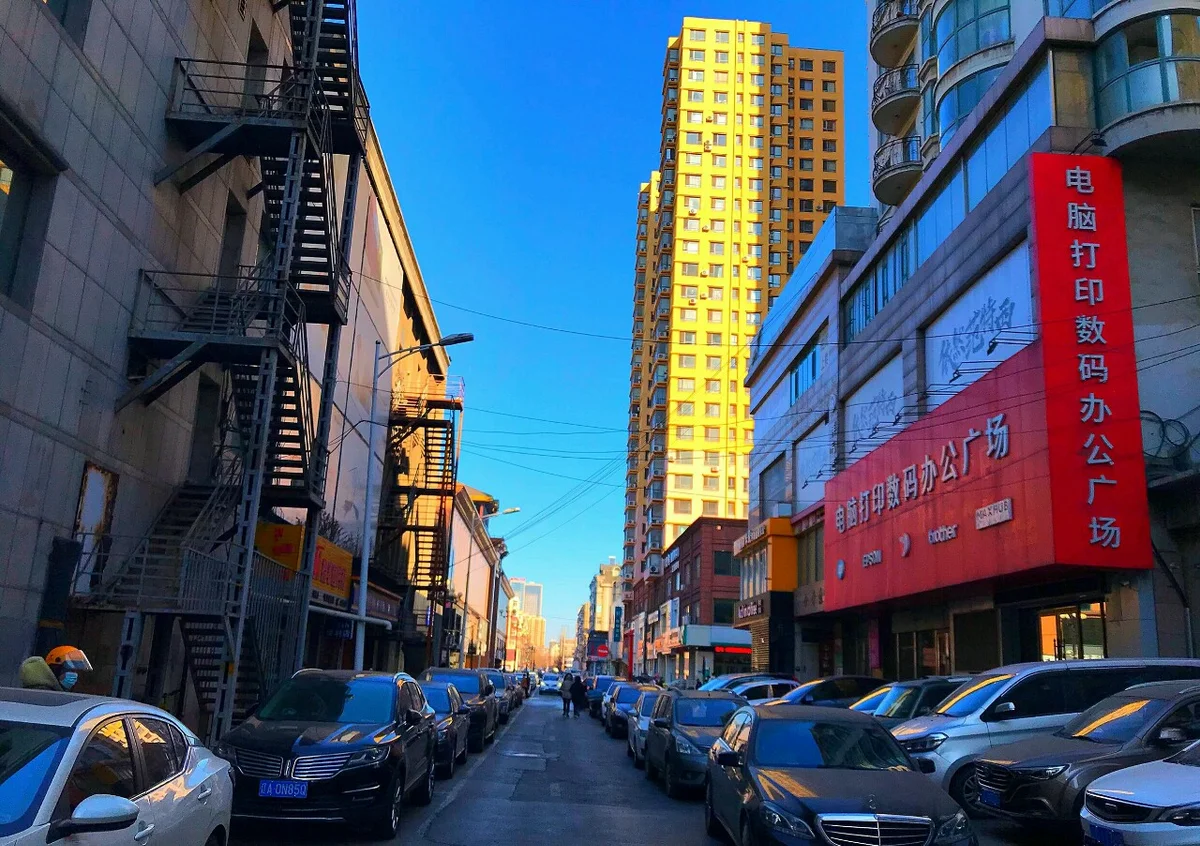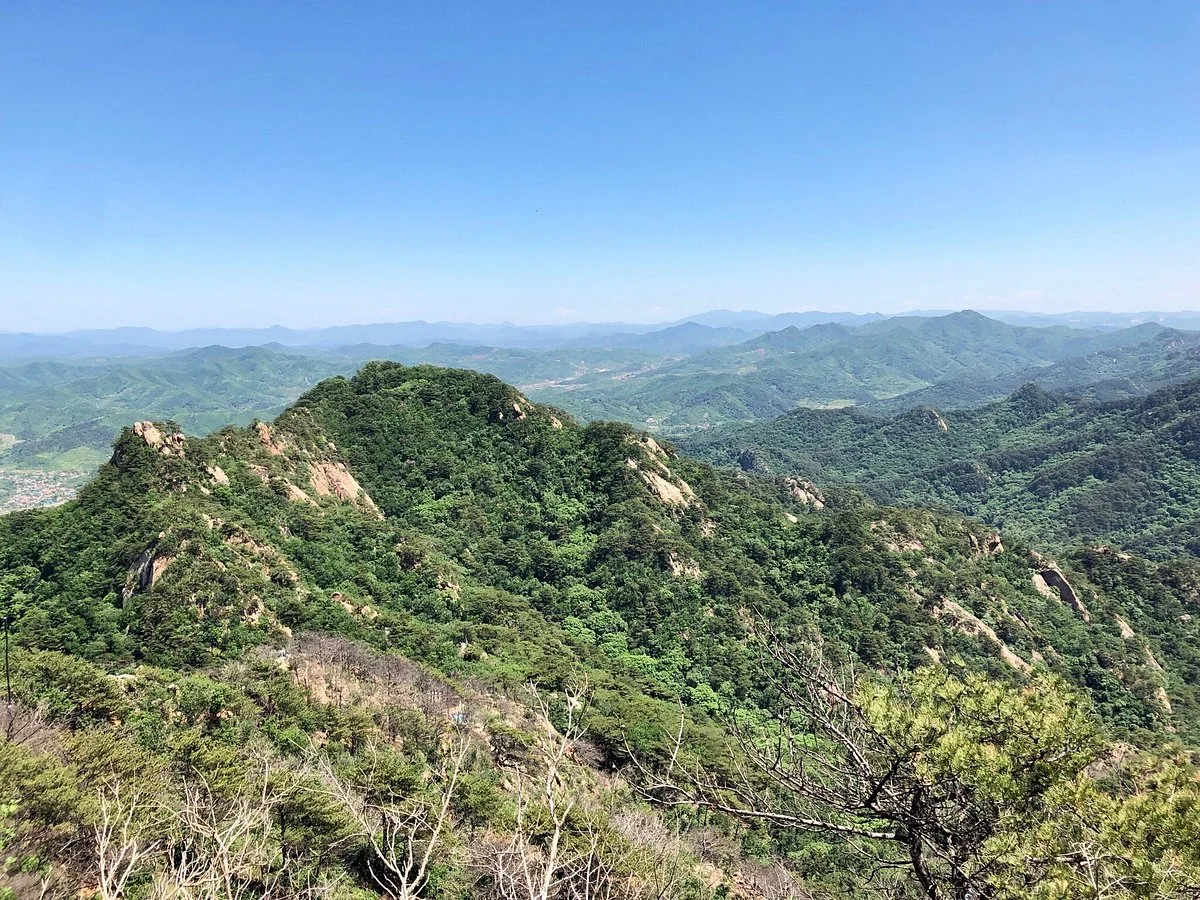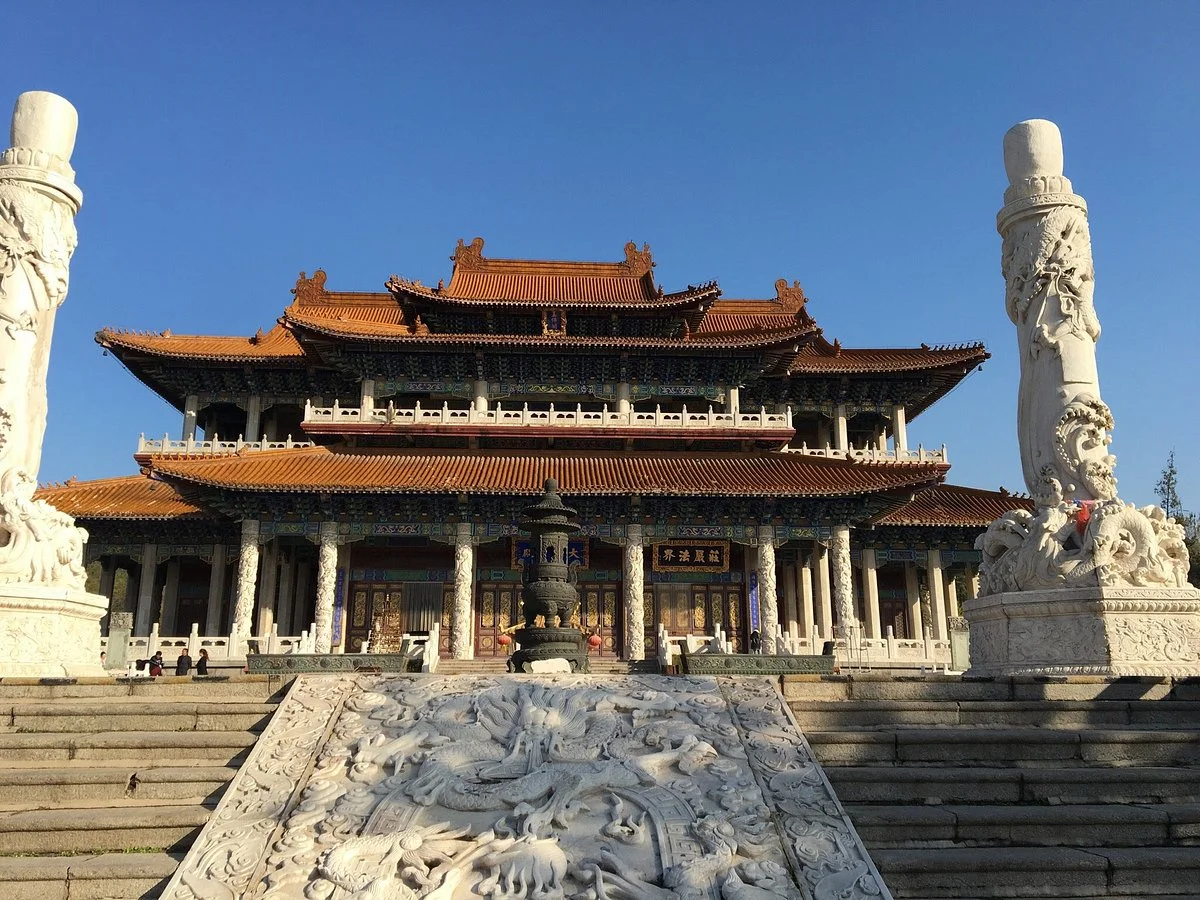
Anshan (Chinese: 鞍山; pinyin: Ānshān; lit. 'saddle mountain') is an inland prefecture-level city in central-southeast Liaoning province, People's Republic of China, about 92 kilometres (57 mi) south of the provincial capital Shenyang. As of the 2020 census, it was Liaoning's third most populous city with a population of 3,325,372 people, over an area of about 9,270 km2 (3,580 sq mi) spanning 133 km (83 mi) from east to the west. Its built-up area encompassing the 4 Anshan urban districts (1,543,696 inhabitants), the 4 out of 5 urban Liaoyang districts (796,962 inhabitants, Gongchangling not being conurbated yet) and Liaoyang county largely being conurbated, was home to 2,712,789 million inhabitants in 2020.
The city's name came from the horse saddle-like shape of a nearby mountain south of the city, which can be seen on the left (west) about five minutes before the northbound train arrives at Anshan railway station. Anshan is home to the Anshan Iron and Steel Group, one of the largest steel producers in China. Anshan is sister city with Sheffield, United Kingdom.
Anshan holds one-third of the world's supply of talcum and a quarter of the world's reserves of magnesite. Anshan also produced the largest ever jade stone, now a local tourist attraction carved as a Buddha statue.
=
=
There are buses to just about every part of town from the area near the train station. Purchase a town map and it should have the bus routes on it. Bus No.8 goes past the Jade Buddha Temple and terminates outside Qianshan Park. To the Jade Buddha will cost ¥2 and to Qianshan ¥8. Most other buses cost ¥1 around the city. A few of the longer routes into the suburbs will cost ¥2. Bus 8 departs from the Jianguo Street behind the long-distance bus station, at the southeast end of the square near the train station. Other buses leave from the local bus station situated to the northwest corner of the square.
Taxis are inexpensive in Anshan. The rates are ¥7 for up to 3 km and ¥2 for each 1 km there after. All taxis are metered but for longer journeys, you may negotiate the fare. A taxi to Qianshan Mountains will cost about ¥30.
The area of Anshan has been inhabited since prehistoric times. In the Tang dynasty, the emperor of China lived in and around Anshan for a period of two years during the wars between China and the Goguryeo. Ansi city, in the south east of modern Anshan, was the scene of a large battle during those wars. During this time, many significant sites were established including the Hot Springs at Tangangzi and many temples in Qianshan. During the Ming Dynasty, a small fort was built in Anshan on the road from Haicheng to Liaoyang. This fort, and an nearby lookout tower are still visible today. The city however remained small and of little importance until the twentieth century.
Japan had gained influence in Liaoning and was industrialising the region. A joint Sino-Japanese venture, Anshan Zhenzing Iron Ore Company Unlimited, was started in Anshan in 1918. After the Japanese occupied the northeast of China in 1931, the company was turned into a Japanese owned monopoly. Anshan was occupied by the Japanese and was part of the Japanese puppet state of Manchuco. The Japanese founded a steel mill alongside the existing iron works in Anshan. The city grew in size around this new industrial site. The defeat of the Japanese in 1945 saw Anshan returned to China. However, peace had not yet arrived. Civil war continued between the Chinese Nationalist Government and the Communist People's Liberation Army. The city of Anshan was the scene of one of the battles of this war. A monument in Lishishan Park commemorates the battle. On the 19th of February 1948, Anshan was liberated by the PLA.
The northeast of China was marked out to become a major industrial centre for the new People's Republic of China. Anshan was set to become a key part of this industrial development. The steel mills had been damaged during the wars. In December 1948, the Anshan Iron and Steel Company, also known as Angang, was founded. Production in the newly repaired steel plant resumed on July 9, 1949. The plant was expanded to become, at one time, the largest steel producer in China. Other industries set up alongside the steel plant including mining for coal, iron and other minerals. This industrial wealth had an environmental cost. The open-hearth furnaces of the steel mill created large amounts of dust and other pollution. Along with its growing reputation as a major steel producer, Anshan was also gaining a reputation as a dirty, smelly town.
The furnaces of the steel plant were changed in the 1980s to designs which blow oxygen in form the front. This increased the production and also reduced the pollution. In the 1990s, they were additionally altered to blow oxygen in form the top as well. This further increase production and reduced pollution. In December 2000, all three production lines of Anshan Iron and Steel company switched form mould-casting to continuous casting. This new technology has significantly reduced the dust and other pollution in the city. The new plant equipment is also much less labour-intensive. This has meant a reduction in the workforce and has caused an unemployment problem in the city. A new drive to market Anshan as a tourist destination is hoped to help bolster the cities economy.